
Resilience is an essential ingredient to a healthy life. The world population is getting older. The study of the phenomenon of resilience has often been examined in the psychological domain, but its complexity requires further investigation from both conceptual and methodological perspectives. The interdisciplinary approach is important to understand mind-body practices and their effects on …
Topic Archives:
Concurrent Session 2 – How Contemplative Practice Infuses Clinical Practice with Serious Illness
Physicians and nurses who work with patients dealing with serious, life-threatening illness experience stress, empathic overload, compassion fatigue, and burnout. In this qualitative study funded by the Mind & Life Institute and the John Templeton Foundation, we are conducting extended qualitative interviews with at least 25 clinicians with an established contemplative practice in the Buddhist …
Concurrent Session 2 – Transforming Moral Distress: Lessons from Philosophy, Neuroscience, and Contemplative Practice
For clinicians exposed daily to pervasive suffering, death, and moral conflict in their work, maintaining composure, courage, and resilience is especially difficult and can lead to moral distress. In this experiential, interactive workshop, we will present collaborative work, supported by the Mind & Life Institute, between clinicians, philosophers, and leaders in contemplative practice and neuroscience. …
Concurrent Session 1 – Trauma-Informed Mindfulness Based Stress Reduction to Promote Intra- and Interpersonal Flourishing Among Survivors of Traumatic Violence
Interpersonal violence is a significant threat to public health with serious ramifications to family and society. Mindfulness based stress reduction (MBSR), originally designed for those dealing with chronic illnesses, is now being offered to individuals with histories of surviving interpersonal violence. Yet, to be optimally effective, MBSR should be modified to address the unique needs …
Concurrent Session 1 – PTSD and Buddhism: An Analogical Mapping Model
We propose a mapping approach for relating Buddhism and trauma psychotherapy — a detailed, asymmetric analogy between a wide range of concepts on both sides. Both posttraumatic stress disorder (PTSD) and Buddhist concepts of suffering are rooted in a stubborn, preconceptual misapprehension: on the PTSD side, vivid re-experiencing of the traumatic event as still present …
Continue reading “Concurrent Session 1 – PTSD and Buddhism: An Analogical Mapping Model”
Master Lecture – Contemplative Science Goes to School
Contemplative Science Goes to School: Improving the Context for Teaching and Learning in the Elementary School Years Through Contemplative Approaches The classroom has been long recognized as an important context for development, particularly during the elementary school years. Optimal learning environments are physically and emotionally safe and provide students with a sense that their thoughts …
Continue reading “Master Lecture – Contemplative Science Goes to School”
ISCS 2014 – Master Lecture – Patricia Jennings, Kimberly Schonert-Reichl
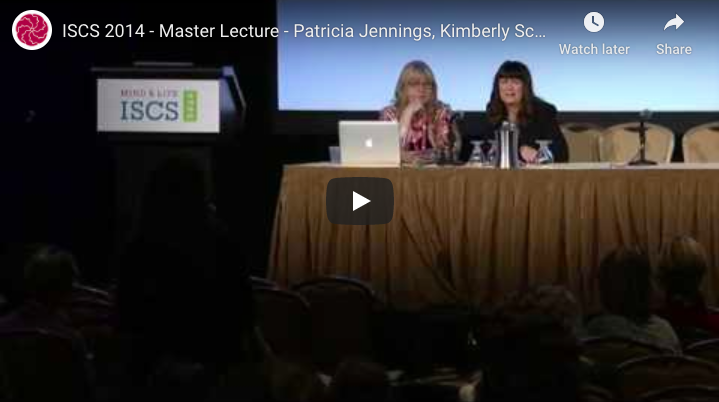
Contemplative Science Goes to School: Improving the Context for Teaching and Learning in the Elementary School Years Through Contemplative Approaches
Concurrent Session 4 – Teaching Mindfulness-Based Training in High-Stress Contexts
This presentation will present research about Mindfulness-Based Mind FitnessTraining (MMFT®) within the context of modifying mindfulness-based training for environments characterized by extreme or prolonged stress and deployment to combat and others in highstress occupations, it will examine how mindfulness training can be integrated with an understanding of the role of the autonomic nervous system in …
Roshi Joan Halifax
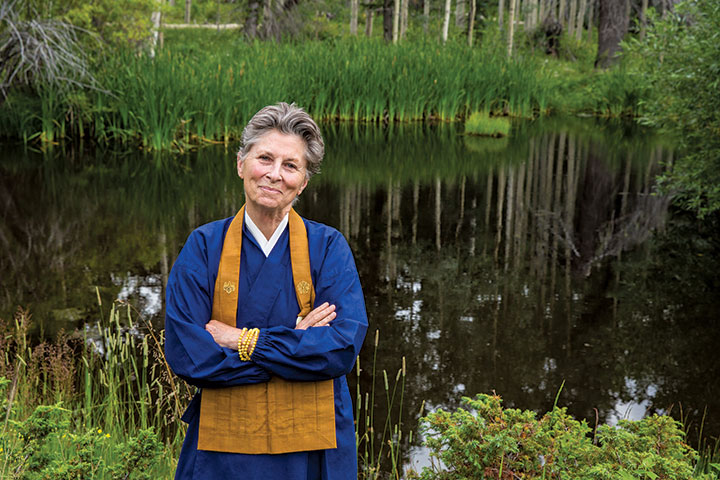
A pioneer in compassion-based medicine on death, dying, and our health care system
Donor Profile – Penny Pilgram George
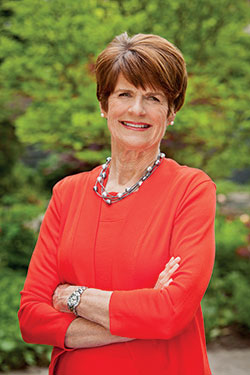
A Q&A on integrative medicine, business, and moving the culture away from distrust