
Mindfulness is practiced and cultivated through the training of attention. Not coincidentally, across thought traditions, attention and its (dys)regulation has long been theorized to underlie various mental habits and biases, common forms of suffering, and well-being. Yet, despite this compelling theory, empirical data supporting these foundational ideas about the nature and function of attention are …
Topic Archives:
How Thinking About Thinking Shapes the Human Experience of Spirit
This talk makes the argument that the way people think about their minds shapes the way they come to know spirit. This is done by looking at the kinds of people who have more vivid spiritual experiences (they are more likely to get absorbed in their inner worlds), the way prayers train attention to inner …
Continue reading “How Thinking About Thinking Shapes the Human Experience of Spirit”
Mental Habits, Prediction Machines, and Controlled Hallucinations
Just as behavioral habits define our behavioral lives, mental habits define our psychological lives. Mental habits can be thought of as the perceptual, emotional, and cognitive processes that shape and bias how we perceive self, others, and the world. This talk will describe a view of mental habits from the perspective of cognitive neuroscience, focusing …
Continue reading “Mental Habits, Prediction Machines, and Controlled Hallucinations”
Measuring, Understanding, and Changing Mental Habits
This presentation will first explore possible domains of mental habits, including personality, social interaction, identity, emotion, mind wandering, and contemplative practice. From the perspective of grounded cognition, the question will be raised as to how “mental” are mental habits, given that they appear to be strongly grounded in external situations (and conversely that physical habits …
Continue reading “Measuring, Understanding, and Changing Mental Habits”
The Quest for Serenity Among the Disenfranchised
This talk explores the spiritual quest of those who are impacted by systemic oppression and the ways the quest focuses on personhood and the need to access true liberation and wellness. There has always been the call for human dignity by those who are dehumanized, which leads to a deep yearning to discover one’s own …
Continue reading “The Quest for Serenity Among the Disenfranchised”
2019 Summer Research Institute
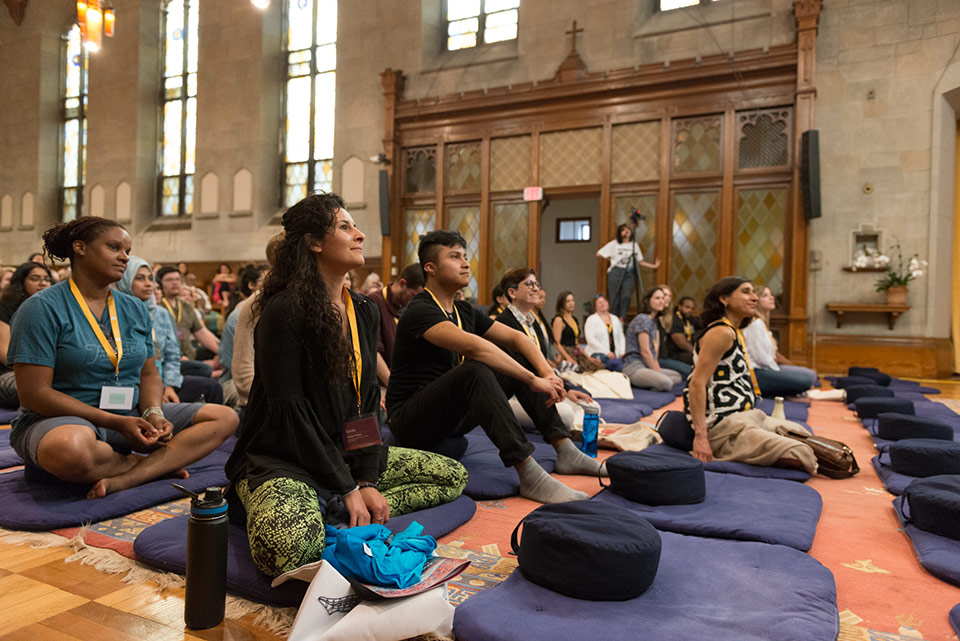
Political strife, immigration, cultural and racial conflict, environmental concerns, depression, and distraction—these issues and many more influence our daily lives as we struggle to find personal well-being and social harmony. How does the latest research on mental habits, contemplation, and compassion inform opportunities to create change for ourselves and others?
Fellow Spotlight: David Creswell

Mind & Life is excited to announce our first-ever Mind & Life Fellow Spotlight! The Fellow Spotlight is a new monthly segment where we will highlight the contributions of Mind & Life Fellows to our shared mission, featuring a different Fellow each month. In this month’s spotlight we are pleased to share the work of …
Seeding Peace in the Heart of Conflict: A Think Tank Project in Colombia

Siblings Juan and Juliana Santoyo received funding from Mind & Life in 2017 to hold a Think Tank to design and plan the implementation of a contemplative practice-based program for ex-combatants in Colombia’s peacebuilding process (members of the program’s pilot pictured above). They believe that nourishing the ability to heal and transform individually and with …
Continue reading “Seeding Peace in the Heart of Conflict: A Think Tank Project in Colombia”
Meditation for Mental Health: How Does Mindfulness Compare to Other Treatments?
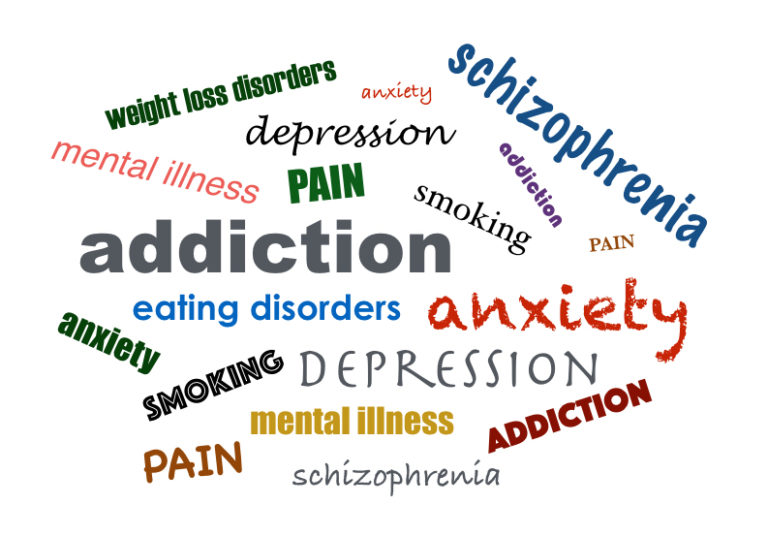
Claims abound about the benefits of mindfulness in promoting human health and well-being, making it hard for people to distinguish between hype and hard science. Over the last two decades, hundreds of trials have explored the impact of meditation and mindfulness on mental health in individual studies, but researchers rarely undertake the challenge of investigating …
Continue reading “Meditation for Mental Health: How Does Mindfulness Compare to Other Treatments?”
Pain Relief without Opioids?

The latest statistics about America’s opioid epidemic are staggering. The Centers for Disease Control (CDC) estimate an average of 125 deaths from opioid overdoses per day in the United States—that means each month, we’re seeing a tragedy more deadly than September 11th. Between July 2016 and September 2017, hospitalizations from opioid overdoses jumped 30 percent …