
Contemplative sciences interventions and studies have primarily targeted individual level changes such as increasing focus and reducing stress. Further, few studies include samples outside WEIRD populations (Western, Educated, Industrialized, Rich, Democratic, Henrich, Heine, & Norenzayan, 2010). This project incorporates an approach that integrates mindfulness as a contemplative practice with service learning training as a form …
Topic Archives:
Mind & Life 2020 President’s Call
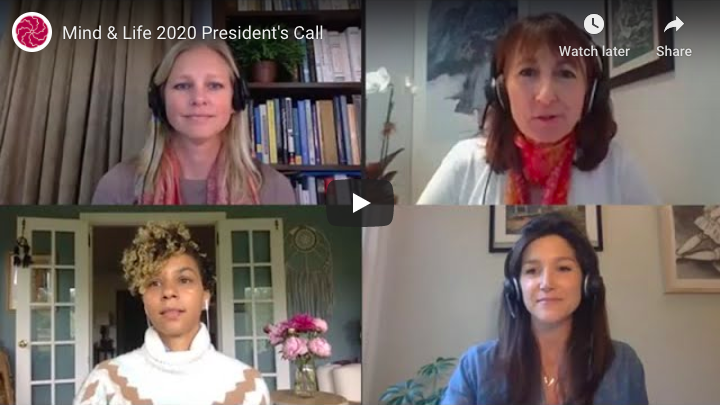
Earlier this year Mind & Life completed a strategic visioning and planning process, to guide our expanding work through a lens of interconnection. We also began developing our digital efforts to have wider reach and greater impact on pressing contemporary issues. As such, Mind & Life is primed and eager to show up fully and make …
2016 Mind & Life Dialogue XXXI
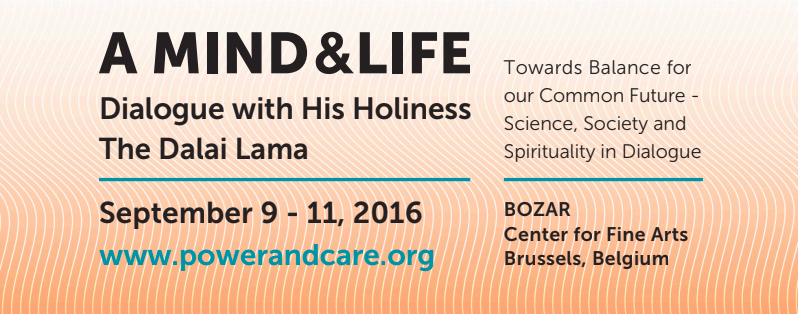
While the notion of power can be seen as a neutral concept, neither harmful nor beneficial by definition, the western historical perspective links it to concepts such as domination, instrumentalization, or sovereignty. This idea of power as power over is apparent in political, societal and interpersonal spheres, as indicated by problems such as the wealth …
2011 Mind & Life Dialogue XXIII

The slow meltdown of Earth’s capacity to sustain much of life, as we know it, poses an urgent challenge for both spiritual traditions and science. These two ways of knowing have developed distinctive responses, which are potentially synergistic. The goal of the meeting is to provide an opportunity to articulate an engaged environmental ethics. This …
2019 Mind & Life Conversation

Join the Mind & Life Institute online for two special free Livestream events from Dharamsala, India. On October 30th and November 1st, we will host two unique conversations between Pumla Goboda-Madikizela, David Sloan Wilson, and the Dalai Lama. Livestream video replays are available.
Exploring the uptake and potential efficacy of brief mindfulness meditation for underserved female tobacco smokers
Mindfulness is associated with positive psychosocial, physical and mental health outcomes prompting research to investigate mindfulness as a tool for smoking cessation. However, there remains sparse evidence on the acceptability and effectiveness of mindfulness interventions in underserved populations, such as low-income, female smokers, who often have elevated levels of daily stress and greater barriers to …
Cultivating mindful schools to promote an equitable climate of learning
Despite decades of school reform, racial, ethnic, and socioeconomic disproportionality in student academic opportunities and discipline continues to be a significant concern throughout the education system. The University of Southern California (USC), the Santa Monica-Malibu Unified School District (SMMUSD), and Mindful Schools (MS) are collaborating on bringing mindfulness training to K-5 teachers/staff to foster an …
Continue reading “Cultivating mindful schools to promote an equitable climate of learning”
VOICES: Vocalizing Oppression and Interconnection in Contemplation and Embodiment Spaces
We propose a research study that partners with community leaders to give a platform to racial/ethnic minorities to speak about their experience with contemplative and healing practices such as meditation, prayer, movement, storytelling, and others. This will be community-based participatory qualitative research and is motivated by 1) the underrepresentation of racial/ethnic minority people in existing …
Mindfulness for the masses: Understanding the approachability of mindfulness-based interventions and measurement of mindfulness among understudied diverse communities
Evidence for the therapeutic effects of mindfulness-based interventions (MBIs) have been demonstrated primarily in high-socioeconomic, White samples. The under-representation of socioeconomically and racially and ethnically diverse samples in MBI studies has raised questions about the approachability and cultural relevancy of MBIs for these communities. Further, among the few studies that have included diverse samples, scores …
Motivating engagement with social justice issues through compassion training: A multi-method randomized control trial
Working towards social justice necessitates dominant group members’ willingness to share the feelings of oppressed outgroup members (outgroup empathy) and to engage in difficult intergroup dialogue. Nevertheless, empathic and behavioral engagement is especially avoided in social justice contexts due to the high demands/costs of such engagement. It is, however, possible to offset high demands and …