
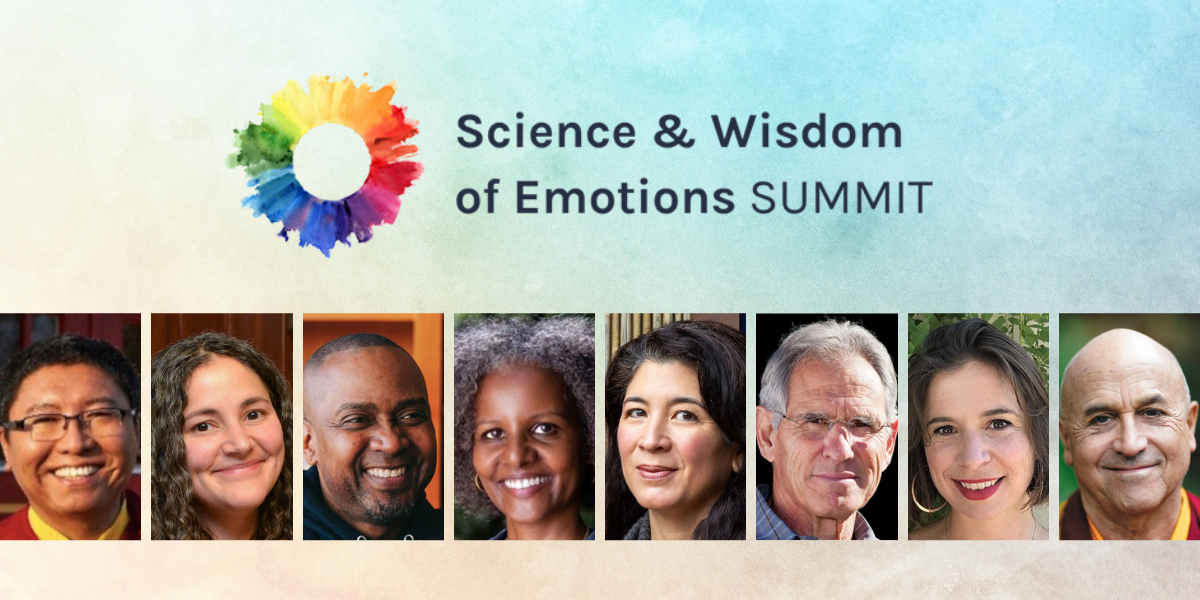
Could transforming our mental states create a better world? This audacious proposition lay at the heart of the Science & Wisdom of Emotions Summit presented by Mind & Life and The Awake Network Foundation on May 2-5. Reflecting growing interest in the cultivation of emotional well-being, more than 100,000 people in 140 countries gathered for …
Topic Archives:
The Hollywood Compassion Coalition: An Idea Whose Time Has Come

Most would agree, today’s media diet is lacking in nutrition. Thanks to globalization and advancing technology, viewers—whether in Nairobi, New York, or New Delhi—now watch the same film premieres on the same night. This boom in the entertainment industry has many asking whether we have a responsibility to produce content that contributes to both individual …
Continue reading “The Hollywood Compassion Coalition: An Idea Whose Time Has Come”
From Awareness to Action: Mind & Life’s Response to Anti-Asian Violence

The horrific treatment of Asian-Americans continued this week with the brutal attack of a 65-year-old Filipino woman on a New York City street. In the wake of such attacks comes the analysis of our collective paralysis, and the recognition that the news that makes it to the headlines fails to account for the pervasiveness of …
Continue reading “From Awareness to Action: Mind & Life’s Response to Anti-Asian Violence”
Inspiring Minds – April 2021

Our April conversation features Amishi Jha and Jon Kabat-Zinn, and cellist Barbara Bogatin. Learn more about the inner workings of the mind, and how to cultivate greater attention and wise action in how we conduct ourselves individually and collectively.
Cultural Variance in Self-Compassion: An Examination of the Cultural Dimensions of the Self-Compassion Concept within Tibetan Communities
The concept of self-compassion is widely used in contemplative science, and there is growing research showing its strong relationship to individual physical and mental wellbeing. However, evidence suggests that ‘self-compassion’ as conceptualized by Western Buddhist scholars and academics for primarily western audiences may lack validity in non-western and particularly Buddhist communities. This study investigates how …
Examining Individual Differences in Contemplative Practice Response
As an intellectual tradition that codeveloped with Tibetan Buddhism for over a thousand years, Tibetan medicine has cultivated clinically-focused knowledge around tracking individual differences related to cognitive-affective patterns and their contingent contexts that impact health and illness in body and mind across the life course. In particular, Tibetan medicine places specific attention on the role …
Continue reading “Examining Individual Differences in Contemplative Practice Response”
Inspiring Minds – January 2021

Our January conversation, “Mindfulness, Resilience, and Compassion for the New Year,” features Rhonda Magee and Jack Kornfield, with musicians Marti Nikko and DJ Drez. We look at how we can lay the foundations for a year of compassion and healing grounded in our shared humanity.
Bridging Psychology and Contemplative Practice to Benefit Hearts and Minds Today

Science has served as a double-edged sword for meditation. On the plus side, scientific research has helped adapt meditation into secular settings, which has provided broad access to Western audiences. It has also led to innovations in healthcare, education, social activism, workplace culture, and other areas. At the same time, there are valid critiques to …
Continue reading “Bridging Psychology and Contemplative Practice to Benefit Hearts and Minds Today”
Dr. Peter Wayne Honored with Catherine Kerr Award for Courageous and Compassionate Science
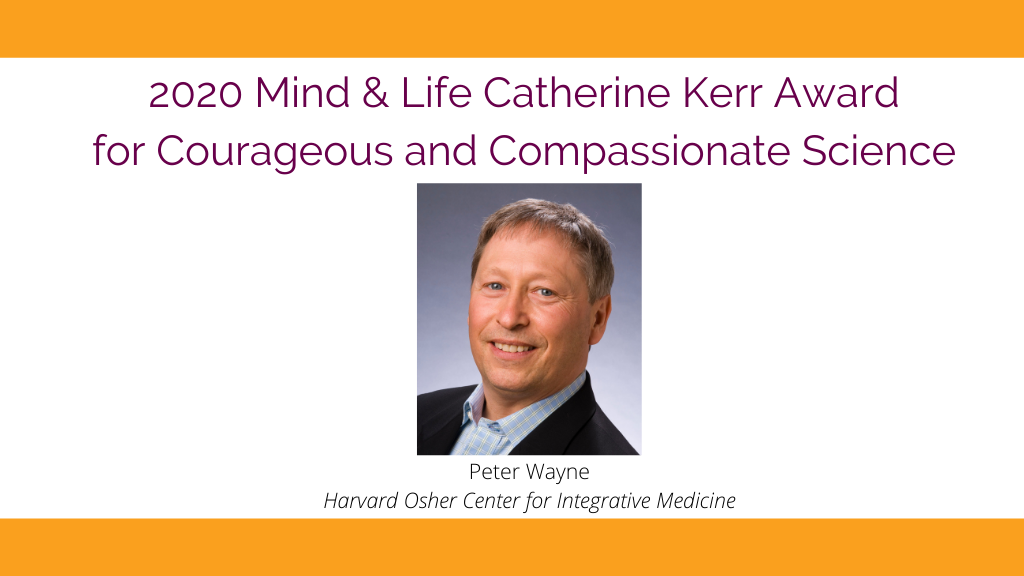
“What excites me is making connections,” says Dr. Peter Wayne, who has devoted much of his career to bridging Chinese medicine and Western science, the mind and body, research and practice. As Director of the Osher Center for Integrative Health at Harvard Medical School and Brigham and Women’s Hospital, Peter oversees efforts to facilitate connections …
Sleep’s role in realizing the prosocial benefits of contemplative practice
Robust learning requires substantial effort. Our recent studies, conducted in a sleep laboratory as well as in typical home environments, have showed that sleep contributes to learning. Indeed, sleep is important for solidifying memories of various types. By extension, in a contemplative practice when people strive to develop enduring prosocial qualities, such as compassion, kindness, …
Continue reading “Sleep’s role in realizing the prosocial benefits of contemplative practice”