Academic psychology and neuroscience have typically centered viewpoints of the dominant culture (WEIRD: White, Educated, Industrialized, Rich, Democratic), which has influenced both the process and content of contemplative neuroscience. By incorporating more diverse perspectives through a lens of social justice, Helen Weng will present new lines of work that center viewpoints of meditators who belong …
In this session, Rob Roeser will present selected developmental science research on social cognition and person-perception—defined in relation to how individuals’ perceptions and understandings of other people/groups develop from infancy through adolescence, and moral and self-development—defined in relation to how individuals’ capacities for self-regulation, compassion, and fairness in social interactions, and their related moral identities …
Lasana Harris’ presentation will focus on flexible social cognition—our ability to infer the mental states of other people, animals, and non-human objects, and to withhold this ability in the presence of others. This latter phenomenon termed dehumanised perception is moderated by the social context, such that people read cues from the situation, as well as …
As cognitive neuroscience steps up its focus on neurological distinctions between different ‘kinds of people,’ patient populations, cultural groups and social categories have begun to be understood in terms of brain-based differences. These differences are often articulated in terms of structural or functional differences, as visualized through neuroimaging techniques. In this talk, Suparna Choudhury will …
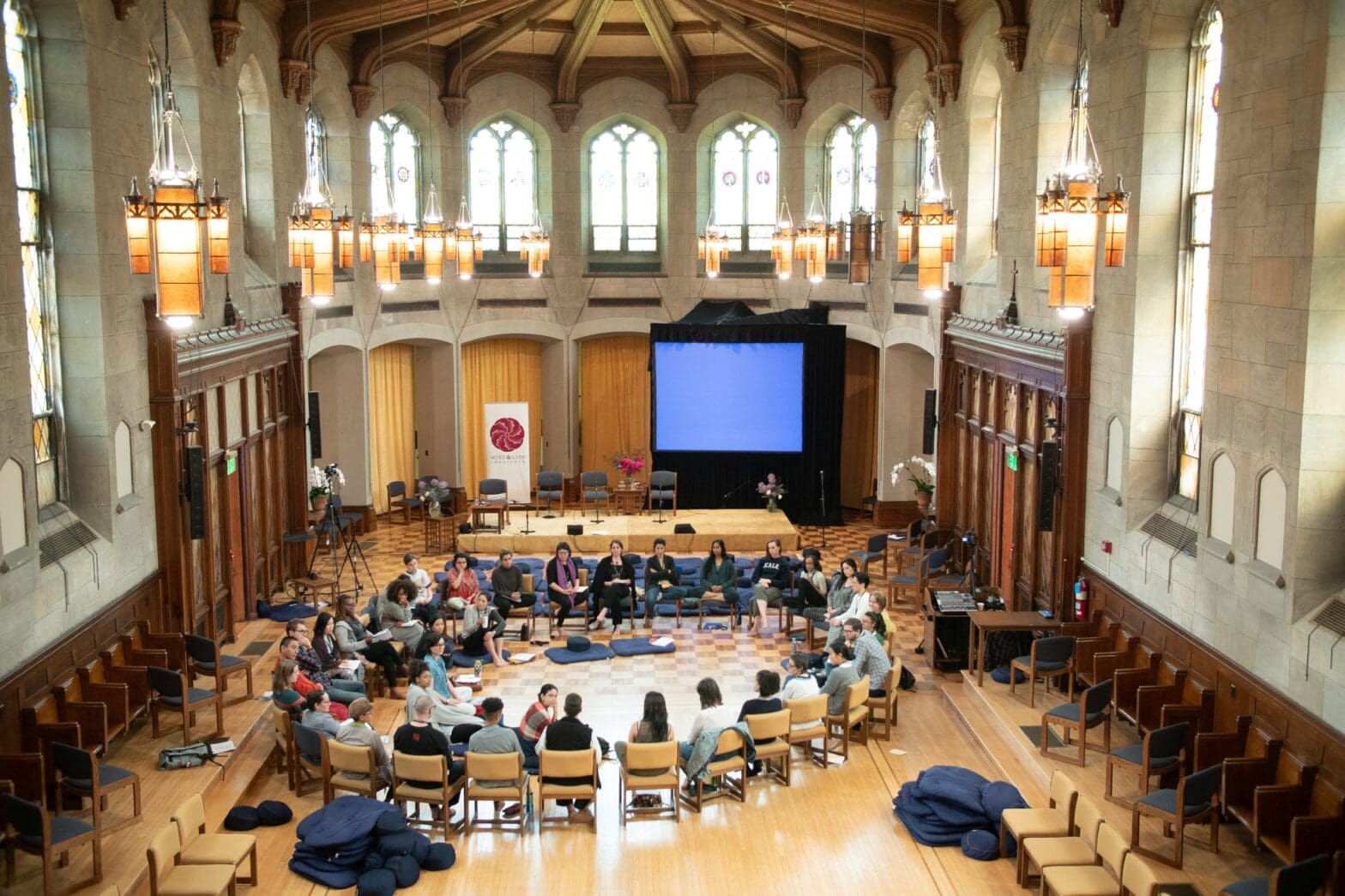
The 2018 Mind & Life Summer Research Institute extends the arc from the 2016 and 2017 programs that addressed themes of context, social connectivity, and intersubjectivity by engaging critical topics relevant to cultural difference and human diversity. The weeklong immersive program will examine social and psychological patterns, both implicit and explicit, to discuss how difference is constructed at personal, interpersonal, and socio-structural levels. Scientific, humanistic, and first-person contemplative perspectives will give attention to processes of othering and how we can overcome conflict by embracing difference.
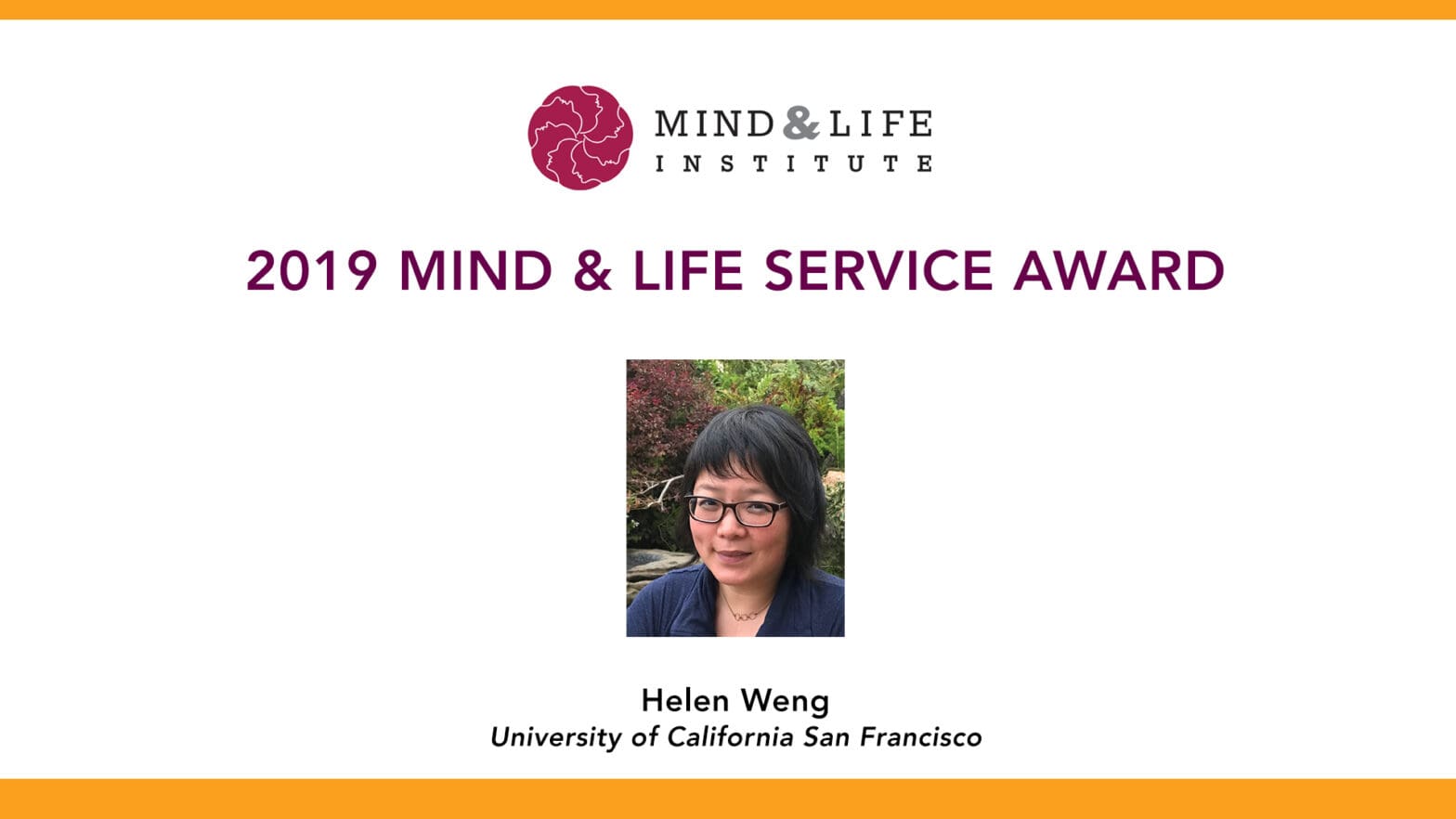
In late 2019, Helen Weng, PhD was honored with the Mind & Life Institute Annual Service Award. The award is given to individuals who are distinguished by the breadth and depth of their involvement with Mind & Life, and who embody its core values of compassion, integrity, curiosity, inclusion, and excellence. Below is a tribute …
The “Translating Neuroscience” panel will explore how to accurately and accessibly convey to the non-scientific public the discoveries of scientific research around contemplative practice while maintaining the integrity and accuracy of the research. Specifically, we will focus on the promises and challenges of communicating complex ideas from neuroscience and cognitive science about the nature of …
What promotes adaptive attitude and behavior change? In this talk, it will be proposed that self-transcendence, or the drive to care for the well-being of others beyond self-interests, is key to increasing receptivity to change. Psychological and neurocognitive mechanisms of self-transcendence that help make people more open to change in the domains of social attitudes …
Mindfulness is practiced and cultivated through the training of attention. Not coincidentally, across thought traditions, attention and its (dys)regulation has long been theorized to underlie various mental habits and biases, common forms of suffering, and well-being. Yet, despite this compelling theory, empirical data supporting these foundational ideas about the nature and function of attention are …
Just as behavioral habits define our behavioral lives, mental habits define our psychological lives. Mental habits can be thought of as the perceptual, emotional, and cognitive processes that shape and bias how we perceive self, others, and the world. This talk will describe a view of mental habits from the perspective of cognitive neuroscience, focusing …