
This breakout session will be an opportunity to further discuss the hypothesized profile (i.e., endophenotype) of patients suffering from anxious depression as well as considerations for what is normative (optimal) emotion regulation, how optimal emotion regulation is disrupted in distressed individuals, and how practices derived from Buddhist mental training exercises can assist in normalizing emotion …
Topic Archives:
Emotion Regulation Therapy: A Synthesis of Affective Neuroscience and Contemplative Practices to Target Mechanisms Underlying Anxious Depression
Despite the availability of efficacious treatments for emotional disorders, a sizable subgroup of patients fails to evidence adequate treatment response. This situation is especially true for patients with anxious depression (a combination of apprehensive anxiety and depression symptoms) who often feel their emotions very intensely resulting in trouble resolving the simultaneous motivational cues for avoiding …
Mind & Life Institute: ISCS 2014 highlights
Concurrent Session 5 – Self, Nonself, and Silencing the Self: Dangers and Possibilities
This presentation brings Buddhist teachings on anatta to research findings based on the Silencing the Self Scale to examine central concepts of self and selflessness from Buddhist and Western psychological perspectives. Anatta, realized through meditation, insight, and teachings, is an essential aspect of the Buddha’s teaching on liberation from suffering. In contrast, selflessness, and self-silencing, …
Concurrent Session 5 – Different Neural Characteristics Associated with MBSR and the Relaxation Response
The two most widely used stress reduction programs are MBSR and the Relaxation Response (RR). Although both programs use meditation techniques and effectively reduce stress, proponents of each program postulate very different mechanistic models. We hypothesized that there would be both shared and unique neural mechanisms associated with each program, as well as differential psychological …
Concurrent Session 3 – Mindfulness, Compassion, and the Therapeutic Presence: Utilizing Contemplative Studies in Clinical Mental Health Counseling
Contemplative studies are integrated into clinical mental health counseling in order to promote one’s natural drive towards self-exploration, self-awareness, and self-actualization. This panel comprises counseling professionals and current doctoral candidates who specialize in various mental health-related topics, including interpersonal trauma, identity and the holistic self, and substance-use treatment. Panelists will create an interactive and discussion-based …
Concurrent Session 3 – Clinical Applications of Meditation for War-Related Mental Health Consequences and Co-Occurring Conditions
The prevalence of post-deployment mental health conditions is high. Deployment to a war zone is associated with a threefold increase in new-onset posttraumatic stress disorder (PTSD), often co-occurring with depression, anxiety, substance use disorders, sleep disturbance, and chronic pain and resulting in high long-term personal and societal costs. High prevalence, combined with the complex chronic …
Concurrent Session 3 – Mindfulness and SelfCompassion-Based Exposure Therapy for Combat Veterans with Posttraumatic Stress Disorder: Clinical Outcome and Neuroimaging Studies
Pilot work (thanks to a Mind and Life Varela grant) found significant symptomreduction following MBCT adapted for combat-related posttraumatic stressdisorder (PTSD). Our subsequent fouryear, federally funded project developed a novel 16-week PTSD group intervention for veterans returning from Afghanistan (OEF) and Iraq (OIF), utilizing mindfulness and self-compassion meditation (Mindfulness-Based Exposure Therapy, or MBET). PTSD patients …
ISCS 2014 – Master Lecture – Sona Dimidjian, Amishi Jha
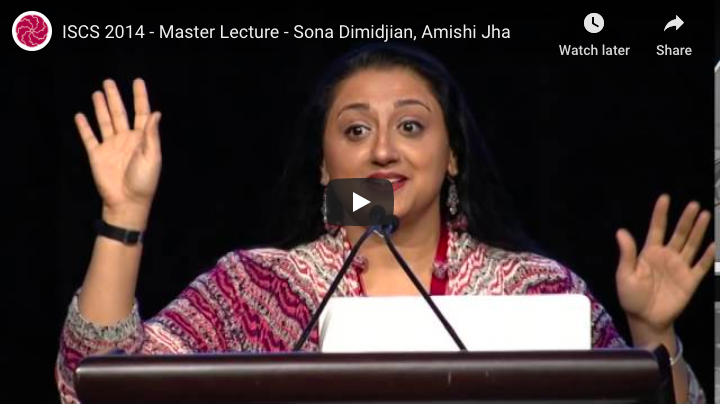
Successes and Challenges of Mindfulness Training in Applied Settings
Master Lecture – Successes and Challenges of Mindfulness Training in Applied Settings
The science and practice of mindfulness-based interventions have witnessed exponential growth in recent years with applications in diverse settings, including health care, education, the workplace, and the military. Such expansion raises complex and engaging questions for the emerging field of contemplative science. In this panel, we discuss questions such as: What do we know and …