Minds

Minds

Overview


His Eminence Khangser Rinpoche, Shaun Gallagher, and Murray Shanahan, with Marc-Henri Deroche as facilitator, examined competing narratives surrounding artificial intelligence, emphasizing that public discourse often overstates AI’s capabilities while obscuring human agency and responsibility. Participants argued that anthropomorphic language and claims of inevitability distort understanding of automation, consciousness, and human values. Drawing on computational linguistics, cognitive science, AI research, and Buddhist philosophy, they advocated critical thinking, transparent governance, and ethical safeguards grounded in compassion and interdependence. The discussion concluded that AI’s future is neither predetermined nor purely technological; rather, it depends upon collective choices that prioritize human relationships, social responsibility, cultural diversity, and the preservation of meaningful human capacities.

  • Dialogue 39
    7 sessions
  • October 14, 2025
    Dharamsala, Himachal Pradesh, India

  • share

Speakers

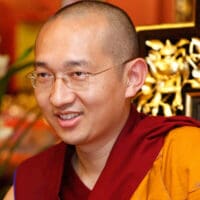
Khangser Rinpoche

Khangser Rinpoche presently serves as a spiritual teacher of Thangkar Dechen Choling Monastery and Dipankara Organization. Rinpoche previously served as a spiritual teacher at Sera Jey Monastic University, one of the three great Monastic Universities affiliated with the Gelugpa tradition which follows the rich culture and knowledge of the ancient Nalanda University, established in Tibet in 15th century. He teaches Buddhist philosophy to several hundred fully ordained monks and novices of the monastic university. He also teaches Buddhism according to Nyingma and Kagyu traditions at several Nyingma and Kagyu monasteries in Dharamsala, India and Nepal. In addition, Khangser Rinpoche delivers public teachings on Tibetan Buddhism to diverse audiences from India, Nepal, Vietnam, China, Korea, Tibet and the West. His audiences congregate at various universities, public agencies, Buddhist centers, and Tibetan Settlements in India and Nepal.

Marc-Henri Deroche

Marc-Henri Deroche, PhD, is Associate Professor in Buddhist Philosophy at Kyoto University where he supervises the Mindful Living Research Group. His work focuses on Buddhist theories of mind and meditation, with a specialization in Tibetan traditions, and the aim to articulate an ethics of attention and a philosophy of mindfulness. He is the author and editor of six books, and his research articles have appeared in Asian Philosophy, Journal of Buddhist Ethics, Mindfulness, etc.

Murray Shanahan

Murray Shanahan is Professor of Cognitive Robotics at Imperial College London and a principal research scientist at Google DeepMind. His publications span artificial intelligence, robotics, machine learning, logic, dynamical systems, computational neuroscience, and philosophy of mind (especially consciousness). He is active in public engagement, and was scientific advisor on the film Ex Machina. His books include “Embodiment and the Inner Life” (2010) and “The Technological Singularity” (2015).

Shaun Gallagher

Shaun Gallagher, Ph.D. is Professor of Philosophy, and IST Senior Researcher, at the University of Central Florida (USA), and Research Professor of Philosophy and Cognitive Science at the University of Hertfordshire (UK). He received his Ph.D. in Philosophy from Bryn Mawr College and an M.A. in Economics at the State University of New York (Buffalo). He is author of Brainstorming: Views and Interviews on the Mind (Imprint Academic, 2008), The Phenomenological Mind (with Dan Zahavi, Routledge 2008), How the Body Shapes the Mind (Oxford University Press 2005), The Inordinance of Time (Northwestern University Press, 1998), and Hermeneutics and Education (SUNY Press, 1992). Gallagher has held visiting positions at the Medical Research Council's Cognition and Brain Science Unit, Cambridge University (1994); at the University of Copenhagen (2004-06), at the Ecole Normale Supériure, Lyon (2007), and most recently at the Zentrum für Literatur- und Kulturforschung (ZfL) in Berlin (2008). He is editor-in-chief of the journal Phenomenology and the Cognitive Sciences, which he co-founded with Francisco Varela and Natalie Depraz.