Stress Disorders and Behavioral Medicine

Stress Disorders and Behavioral Medicine

Overview

Daniel Brown explores the possibility that the body uses a rapid energy-based signaling system alongside the slower chemical and cellular communication of the immune system. Drawing connections between emerging Western theories, acupuncture, Chinese medicine, and Tibetan concepts of channels and subtle energies, he describes research suggesting that connective tissue and acupuncture points may transmit information throughout the body, while repeatedly acknowledging that these ideas remain speculative and controversial. The discussion considers whether such a system could help detect and address imbalances before illness develops, how meditation and yogic practices might influence physical and mental states through subtle energies, and whether these effects could be studied scientifically. The conversation then turns to Tibetan Buddhist accounts of heightened perception and the stages of dying, including the possibility that subtle consciousness and energy may persist temporarily after clinical death, opening broader questions about how health, consciousness, embodiment, and death are understood across scientific and contemplative traditions.

Speakers

Cliff Saron

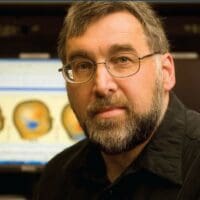
Cliff Saron, Ph.D., is currently an Assistant Research Scientist at the Center for Mind and Brain at the University of California at Davis (http://mindbrain.ucdavis.edu), and faculty member of the UC Davis M.I.N.D. Institute. He received his Ph.D. in Neuroscience from the Albert Einstein College of Medicine in 1999 studying interhemispheric visuomotor integration under the direction of Herbert Vaughan, Jr. Dr. Saron has had a long-standing interest in brain and behavioral effects of meditation practice and has been faculty at the Mind and Life Summer Institute for the past three years. In the early 1990's he was centrally involved in a field research project investigating Tibetan Buddhist mind training in collaboration with Jose Cabezón, Richard Davidson, Francisco Varela, Alan Wallace and others under the auspices of the Private Office of H.H. the Dalai Lama and the Mind and Life Institute. Currently, in collaboration with Buddhist scholar Alan Wallace and a consortium of scientists at UC Davis and elsewhere, he is Principal Investigator of The Shamatha Project, a unique longitudinal study of the effects of intensive meditation training based on the practice of meditative quiescence (shamatha) and cultivation of the four immeasurables (loving kindness, compassion, empathetic joy, and equanimity) on attention-related skills and emotion regulation. The Shamatha Project is the most comprehensive and multimethod study to date regarding the potential effects of long-term intensive meditation practice on basic mental and physical processes related to cognition, emotion, and motivation. His other primary research interest focuses on investigating brain and behavioral correlates of sensory processing and multisensory integration in children on the autistic spectrum.

Daniel Brown

Daniel Goleman

Daniel Goleman, PhD, is a psychologist and science writer best-known for his worldwide best-seller Emotional Intelligence, published in 40 languages. He taught at Harvard University before becoming an editor and journalist, covering the brain and behavioral science for the New York Times. He is a co-founder of the Collaborative for Academic, Social, and Emotional Learning at the University of Illinois, and co-director of the Consortium for Research on Emotional Intelligence in Organizations at Rutgers University. He received his Ph.D. in psychology from Harvard University. For two years he traveled in India studying Buddhist and other spiritual systems of psychology, the first year as a Harvard Traveling Fellow, the second as a Research Fellow of the Social Science Research Council. He is a Fellow of the American Association for the Advancement of Science, and has received many awards for his writing. He is the author of numerous books, including The Meditative Mind, Destructive Emotions, Social Intelligence, and, most recently, Ecological Intelligence.

Francisco Varela

Francisco J. Varela (1946-2001) co-founded the Mind & Life Institute in 1987. Born in Chile, he received his PhD in Biology from Harvard University in 1970. Trained as a biologist, mathematician, and philosopher, he wrote and edited numerous books and journal articles on biology, neurology, cognitive science, mathematics, and philosophy. Francisco introduced the concept of autopoiesis to biology and supported embodied philosophy, viewing human cognition and consciousness in terms of the enactive structures in which they arise. His work popularized within the field of neuroscience the concept of neurophenomenology, which requires observers to examine their own conscious experience using scientifically verifiable methods. His book The Embodied Mind: Cognitive Science and Human Experience (1991), co-authored with Evan Thompson and Eleanor Rosch, is considered a classic in the field of cognitive science, offering pioneering phenomenological connections and introducing the Buddhism-informed enactivist and embodied cognition approach. In 2004, Mind & Life launched the Francisco J. Varela Research Grants to support the examination of contemplative techniques and their application to reducing human suffering and promote flourishing.

His Holiness The Dalai Lama

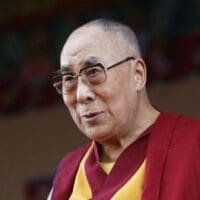
Tenzin Gyatso, the14th Dalai Lama, is the leader of Tibetan Buddhism and a spiritual leader revered worldwide. He was born on July 6, 1935, in a small village called Taktser in northeastern Tibet. Born to a peasant family, he was recognized at the age of two, in accordance with Tibetan tradition, as the reincarnation of his predecessor, the 13th Dalai Lama. The Dalai Lamas are manifestations of the Buddha of Compassion, who choose to reincarnate for the purpose of serving human beings. Winner of the Nobel Prize for Peace in 1989, he is universally respected as a spokesman for the compassionate and peaceful resolution of human conflict. He has traveled extensively, speaking on subjects including universal responsibility, love, compassion and kindness. Less well known is his intense personal interest in the sciences; he has said that if he were not a monk, he would have liked to be an engineer. As a youth in Lhasa it was he who was called on to fix broken machinery in the Potala Palace, be it a clock or a car. He has a vigorous interest in learning the newest developments in science, and brings to bear both a voice for the humanistic implications of the findings, and a high degree of intuitive methodological sophistication.