Day 4 Afternoon Discussion

Day 4 Afternoon Discussion

Overview

Daniel Brown continues his introduction to behavioral medicine by examining whether exercise, relaxation, social support, emotional well-being, and visualization can strengthen the body’s response to HIV/AIDS and cancer. He emphasizes that the evidence was preliminary and that mind-body practices should complement medical treatment rather than be presented as cures, since such claims may cause patients to blame themselves when illness continues. The discussion then turns to survivors of torture and displacement, outlining a gradual approach to healing that begins with restoring safety, basic needs, community, cultural identity, religious practice, and supportive relationships before directly addressing traumatic memories. The Dalai Lama describes how some Tibetan prisoners drew resilience from spiritual practice, belief in karma, taking refuge, reflection on impermanence, and confidence that truth would prevail. Participants compare these experiences with trauma among Cambodian, Chilean, and other refugee communities, concluding that Tibetan survivors could offer important insights into how meaning, culture, and contemplative practice may protect against some effects of trauma. The medical discussion reflects the scientific knowledge available when the Dialogue was recorded and should not be treated as current HIV or cancer guidance.

Speakers

B. Alan Wallace

B. Alan Wallace is president of The Santa Barbara Institute for Consciousness Studies. He trained for many years as a monk in Buddhist monasteries in India and Switzerland. He has taught Buddhist theory and practice in Europe and America since 1976 and has served as interpreter for numerous Tibetan scholars and contemplatives, including H. H. the Dalai Lama. After graduating summa cum laude from Amherst College, where he studied physics and the ahilosophy of science, he earned his M.A. and Ph.D. in religious Studies at Stanford University. He has edited, translated, 13 authored, and contributed to more than thirty books on Tibetan Buddhism, medicine, language, and culture, and the interface between science and religion.

Daniel Brown

Daniel Goleman

Daniel Goleman, PhD, is a psychologist and science writer best-known for his worldwide best-seller Emotional Intelligence, published in 40 languages. He taught at Harvard University before becoming an editor and journalist, covering the brain and behavioral science for the New York Times. He is a co-founder of the Collaborative for Academic, Social, and Emotional Learning at the University of Illinois, and co-director of the Consortium for Research on Emotional Intelligence in Organizations at Rutgers University. He received his Ph.D. in psychology from Harvard University. For two years he traveled in India studying Buddhist and other spiritual systems of psychology, the first year as a Harvard Traveling Fellow, the second as a Research Fellow of the Social Science Research Council. He is a Fellow of the American Association for the Advancement of Science, and has received many awards for his writing. He is the author of numerous books, including The Meditative Mind, Destructive Emotions, Social Intelligence, and, most recently, Ecological Intelligence.

Francisco Varela

Francisco J. Varela (1946-2001) co-founded the Mind & Life Institute in 1987. Born in Chile, he received his PhD in Biology from Harvard University in 1970. Trained as a biologist, mathematician, and philosopher, he wrote and edited numerous books and journal articles on biology, neurology, cognitive science, mathematics, and philosophy. Francisco introduced the concept of autopoiesis to biology and supported embodied philosophy, viewing human cognition and consciousness in terms of the enactive structures in which they arise. His work popularized within the field of neuroscience the concept of neurophenomenology, which requires observers to examine their own conscious experience using scientifically verifiable methods. His book The Embodied Mind: Cognitive Science and Human Experience (1991), co-authored with Evan Thompson and Eleanor Rosch, is considered a classic in the field of cognitive science, offering pioneering phenomenological connections and introducing the Buddhism-informed enactivist and embodied cognition approach. In 2004, Mind & Life launched the Francisco J. Varela Research Grants to support the examination of contemplative techniques and their application to reducing human suffering and promote flourishing.

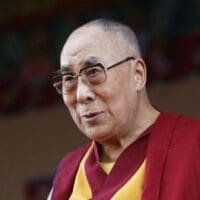
His Holiness The Dalai Lama

Tenzin Gyatso, the14th Dalai Lama, is the leader of Tibetan Buddhism and a spiritual leader revered worldwide. He was born on July 6, 1935, in a small village called Taktser in northeastern Tibet. Born to a peasant family, he was recognized at the age of two, in accordance with Tibetan tradition, as the reincarnation of his predecessor, the 13th Dalai Lama. The Dalai Lamas are manifestations of the Buddha of Compassion, who choose to reincarnate for the purpose of serving human beings. Winner of the Nobel Prize for Peace in 1989, he is universally respected as a spokesman for the compassionate and peaceful resolution of human conflict. He has traveled extensively, speaking on subjects including universal responsibility, love, compassion and kindness. Less well known is his intense personal interest in the sciences; he has said that if he were not a monk, he would have liked to be an engineer. As a youth in Lhasa it was he who was called on to fix broken machinery in the Potala Palace, be it a clock or a car. He has a vigorous interest in learning the newest developments in science, and brings to bear both a voice for the humanistic implications of the findings, and a high degree of intuitive methodological sophistication.

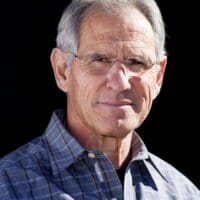
Jon Kabat-Zinn

Jon Kabat-Zinn, Ph.D. did his doctoral work in molecular biology at MIT, in the laboratory of the Nobel Laureate Salvador Luria. Kabat-Zinn is Professor of Medicine emeritus at the University of Massachusetts Medical School, where he founded the Center for Mindfulness in Medicine, Health Care, and Society (in 1995), and (in 1979) its world-renown Mindfulness-Based Stress Reduction (MBSR) Clinic. He is the author of 14 books, published in over 45 languages. His work has contributed to a growing movement of mindfulness into mainstream institutions such as medicine, psychology, health care, neuroscience, schools, higher education, business, social justice, criminal justice, prisons, the law, technology, government, and professional sports. Over 700 hospitals and medical centers around the world now offer MBSR. Jon lectures and leads mindfulness workshops and retreats around the world.

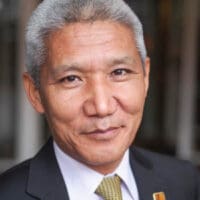
Thupten Jinpa

Thupten Jinpa, PhD, was trained as a monk at the Shartse College of Ganden Monastic University, South India, where he received the Geshe Lharam degree. In addition, Jinpa holds a bachelor’s honors degree in philosophy and a PhD in religious studies, both from Cambridge University. He taught at Ganden monastery and worked as a research fellow in Eastern religions at Girton College, Cambridge University. Jinpa has been the principal English translator to His Holiness the Dalai Lama since 1985 and has translated and edited numerous books by the Dalai Lama, including the New York Times best-sellers Ethics for the New Millennium and The Art of Happiness, as well as Beyond Religion, Universe in a Single Atom, and Transforming the Mind. His own publications include, in addition to numerous Tibetan works, Essential Mind Training; Wisdom of the Kadam Masters; Self, Reality, and Reason in Tibetan Philosophy: Tsongkhapa’s Quest for the Middle View; as well as translations of major Tibetan works featured in The Library of Tibetan Classics series. He is the main author of Compassion Cultivation Training (CCT), an eight-week formal program developed at the Center for Compassion and Altruism Research and Education (CCARE) at Stanford University. Jinpa is an adjunct professor on the faculty of religious studies at McGill University, Montreal; the founder and president of the Institute of Tibetan Classics, Montreal; and the general series editor of The Library of Tibetan Classics series. He has been a core member of the Mind & Life Institute from its inception. Jinpa lives in Montreal and is married with two daughters.