
Envisioning the World Citizen

Envisioning the World Citizen

Overview

Marian Wright Edelman argues that society’s true measure of progress is how well it protects and prepares all children, especially those who are poor or vulnerable, through health care, education, safety, opportunity, love, and strong communities rather than prioritizing wealth, military power, or consumption. She calls on adults to challenge inequality, inadequate child health care, underfunded education, and the “cradle to prison pipeline,” while becoming active “thermostat” citizens who change the social and political climate for the better. The Dalai Lama reinforces this message by describing young people as the foundation of hope for a more peaceful century and emphasizing education, compassion, responsibility, courage, perseverance, dialogue, and nonviolence. Together, they urge adults to invest in children and empower them as capable participants in building a more just, compassionate, and peaceful world.

  • Dialogue 19
    7 sessions
  • October 8, 2009
    DAR Constitution Hall, Washington, DC, USA
  • share

Speakers

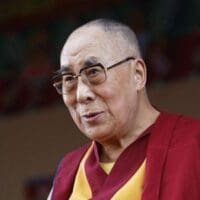
His Holiness The Dalai Lama

Tenzin Gyatso, the14th Dalai Lama, is the leader of Tibetan Buddhism and a spiritual leader revered worldwide. He was born on July 6, 1935, in a small village called Taktser in northeastern Tibet. Born to a peasant family, he was recognized at the age of two, in accordance with Tibetan tradition, as the reincarnation of his predecessor, the 13th Dalai Lama. The Dalai Lamas are manifestations of the Buddha of Compassion, who choose to reincarnate for the purpose of serving human beings. Winner of the Nobel Prize for Peace in 1989, he is universally respected as a spokesman for the compassionate and peaceful resolution of human conflict. He has traveled extensively, speaking on subjects including universal responsibility, love, compassion and kindness. Less well known is his intense personal interest in the sciences; he has said that if he were not a monk, he would have liked to be an engineer. As a youth in Lhasa it was he who was called on to fix broken machinery in the Potala Palace, be it a clock or a car. He has a vigorous interest in learning the newest developments in science, and brings to bear both a voice for the humanistic implications of the findings, and a high degree of intuitive methodological sophistication.

Marian Wright Edelman