Opening Remarks

Opening Remarks

Overview

This segment features Roshi Joan Halifax, Martin Brokenleg, Adam Engle, Daniel Goleman, and Jacquelyn Eccles followed by opening remarks from the Dalai Lama.

  • Dialogue 19
    7 sessions
  • October 8, 2009
    DAR Constitution Hall, Washington, DC, USA
  • share

Speakers

Adam Engle

Daniel Goleman

Daniel Goleman, PhD, is a psychologist and science writer best-known for his worldwide best-seller Emotional Intelligence, published in 40 languages. He taught at Harvard University before becoming an editor and journalist, covering the brain and behavioral science for the New York Times. He is a co-founder of the Collaborative for Academic, Social, and Emotional Learning at the University of Illinois, and co-director of the Consortium for Research on Emotional Intelligence in Organizations at Rutgers University. He received his Ph.D. in psychology from Harvard University. For two years he traveled in India studying Buddhist and other spiritual systems of psychology, the first year as a Harvard Traveling Fellow, the second as a Research Fellow of the Social Science Research Council. He is a Fellow of the American Association for the Advancement of Science, and has received many awards for his writing. He is the author of numerous books, including The Meditative Mind, Destructive Emotions, Social Intelligence, and, most recently, Ecological Intelligence.

His Holiness The Dalai Lama

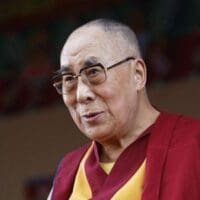
Tenzin Gyatso, the14th Dalai Lama, is the leader of Tibetan Buddhism and a spiritual leader revered worldwide. He was born on July 6, 1935, in a small village called Taktser in northeastern Tibet. Born to a peasant family, he was recognized at the age of two, in accordance with Tibetan tradition, as the reincarnation of his predecessor, the 13th Dalai Lama. The Dalai Lamas are manifestations of the Buddha of Compassion, who choose to reincarnate for the purpose of serving human beings. Winner of the Nobel Prize for Peace in 1989, he is universally respected as a spokesman for the compassionate and peaceful resolution of human conflict. He has traveled extensively, speaking on subjects including universal responsibility, love, compassion and kindness. Less well known is his intense personal interest in the sciences; he has said that if he were not a monk, he would have liked to be an engineer. As a youth in Lhasa it was he who was called on to fix broken machinery in the Potala Palace, be it a clock or a car. He has a vigorous interest in learning the newest developments in science, and brings to bear both a voice for the humanistic implications of the findings, and a high degree of intuitive methodological sophistication.

Jacquelyn Eccles

Joan Halifax

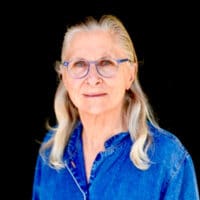
Roshi Joan Halifax, PhD, is a Buddhist teacher, Zen priest, anthropologist, and pioneer in the field of end-of-life care. Founder, abbot, and head teacher of Upaya Institute and Zen Center in Santa Fe, New Mexico, she received her PhD in medical anthropology in1973 while teaching at the University of Miami Medical School. She has been awarded a National Science Foundation fellowship in visual anthropology and an honorary research fellowship in medical ethnobotany at Harvard University, and was named a distinguished visiting scholar at the Library of Congress. From 1972–1975, she worked with psychiatrist Stanislav Grof at the Maryland Psychiatric Research Center with dying cancer patients. She has continued to work with dying people and their families, and she teaches healthcare professionals and family caregivers about the psychosocial, ethical, and spiritual aspects of caring for the dying. She is director of the Project on Being with Dying, and founder and director of the Upaya Prison Project, which has developed programs on meditation for prisoners. She studied with Zen teacher Seung Sahn, received the Lamp Transmission from Thich Nhat Hanh, and was given Inka by Roshi Bernie Glassman. A founding teacher of the Zen Peacemaker Order, her work and practice for more than four decades has focused on applied Buddhism.

Martin Brokenleg