Day 1 – Panel Discussion

Day 1 – Panel Discussion

Overview

The panel argues that education should do far more than transmit academic knowledge: it should help children become healthy, confident, compassionate, socially responsible people who can flourish and contribute to a more peaceful society. Marian Wright Edelman emphasizes educating the “whole child” through strong health care, supportive families, high expectations, and teachers who genuinely love and believe in their students, while Linda Darling-Hammond calls for schools built around trust, respect, empathy, and teacher preparation that helps educators understand each child’s strengths and experiences. The Dalai Lama and Matthieu Ricard add that compassion, altruism, and emotional balance are capacities that can be deliberately cultivated through supportive relationships, reflection, practice, cooperation, service, and reasoning rather than competition alone. The discussion also highlights adolescents’ desire to matter and help others, showing how giving students meaningful responsibilities—such as tutoring younger children—can build confidence, academic skills, and compassion at the same time. Overall, the speakers call for an educational system that combines intellectual development with emotional and ethical growth, creates caring school environments, and gives young people opportunities to practice empathy, responsibility, and service so they can develop both personal happiness and the ability to improve their communities.

  • Dialogue 19
    7 sessions
  • October 8, 2009
    DAR Constitution Hall, Washington, DC, USA
  • share

Speakers

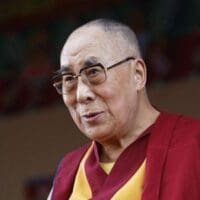
His Holiness The Dalai Lama

Tenzin Gyatso, the14th Dalai Lama, is the leader of Tibetan Buddhism and a spiritual leader revered worldwide. He was born on July 6, 1935, in a small village called Taktser in northeastern Tibet. Born to a peasant family, he was recognized at the age of two, in accordance with Tibetan tradition, as the reincarnation of his predecessor, the 13th Dalai Lama. The Dalai Lamas are manifestations of the Buddha of Compassion, who choose to reincarnate for the purpose of serving human beings. Winner of the Nobel Prize for Peace in 1989, he is universally respected as a spokesman for the compassionate and peaceful resolution of human conflict. He has traveled extensively, speaking on subjects including universal responsibility, love, compassion and kindness. Less well known is his intense personal interest in the sciences; he has said that if he were not a monk, he would have liked to be an engineer. As a youth in Lhasa it was he who was called on to fix broken machinery in the Potala Palace, be it a clock or a car. He has a vigorous interest in learning the newest developments in science, and brings to bear both a voice for the humanistic implications of the findings, and a high degree of intuitive methodological sophistication.

Jacquelyn Eccles

Linda Darling-Hammond

Marian Wright Edelman

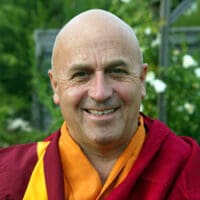
Matthieu Ricard

Matthieu Ricard, PhD, is a Buddhist monk at Schechen Monastery in Kathmandu, Nepal. Born in France in 1946, he received a PhD in cellular genetics at the Institut Pasteur under Nobel Laureate FrancoisJacob. As a hobby, he wrote Animal Migrations (1969).He first traveled to the Himalayas in 1967 and has lived there since 1972, studying with Kangyur Rinpoche and Dilgo Khyentse Rinpoche, two of the most eminent Tibetan teachers of our times. Since 1989, he has served as the French interpreter for His Holiness the Dalai Lama. He is the author of The Monk and the Philosopher (with his father, the French thinker Jean-Francois Revel); The Quantum and the Lotus (with the astrophysicist Trinh Xuan Thuan); Happiness, A Guide to Developing Life’s Most Import-ant Skill; and Why Meditate?. He has translated several books from Tibetan into English and French, including The Life of Shabkar and The Heart of Compassion.As a photographer, Matthieu has published several albums, including The Spirit of Tibet, Buddhist Himalayas, Tibet, Motionless Journey, and Bhutan. He devotes all of the proceeds from his books and much of his time to 120 humanitarian projects in Tibet, Nepal, and India—and to the preservation of the Tibetan cultural heritage—through his charitable association, Karuna-Shechen. Ricard has been deeply involved in the work of the Mind & Life Institute for many years.