Reflections, Integration and Future Directions for Research and Policy

Reflections, Integration and Future Directions for Research and Policy

Overview

The final session of Mind & Life XX reflects on how compassion, altruism, leadership, education, and institutional design might come together to create economic systems that support both material prosperity and human and environmental well-being. Joan Halifax frames compassion as a necessity for survival, while Bill George argues that transforming organizations requires compassionate, authentic leaders who see leadership as service, emphasize purpose and meaning over status and wealth, empower others rather than dominate them, and cultivate self-awareness, humility, discipline, and resilience. The Dalai Lama responds that such leaders must be developed through education that deliberately cultivates inner values, warm-heartedness, responsibility, and awareness of interdependence, alongside technical knowledge. Richard Davidson summarizes evidence that humans are capable of genuine altruism, that empathy and compassion have measurable neural correlates, and that compassion can be strengthened through training; the Dalai Lama stresses that compassion must be joined with intelligence and a wider perspective so that concern for suffering becomes effective rather than helpless. Ernst Fehr highlights both the scientific evidence for human altruism and major unanswered questions about how personality, education, envy, culture, and social institutions shape altruistic behavior. In response, the Dalai Lama argues that Buddhism itself is not necessary for an altruistic society; rather, secular society can draw on universal insights from Buddhist psychology about mind and emotion, along with the principle of interdependence, while leaving religious doctrine aside. The conference concludes with a call to integrate secular ethics and mental training into education from childhood onward, continue rigorous scientific research, reduce excessive materialism and individualism, and make these ideas widely accessible so that greater compassion, happiness, and social responsibility can gradually become embedded in future generations and economic life.

Speakers

Ernst Fehr

His Holiness The Dalai Lama

Tenzin Gyatso, the14th Dalai Lama, is the leader of Tibetan Buddhism and a spiritual leader revered worldwide. He was born on July 6, 1935, in a small village called Taktser in northeastern Tibet. Born to a peasant family, he was recognized at the age of two, in accordance with Tibetan tradition, as the reincarnation of his predecessor, the 13th Dalai Lama. The Dalai Lamas are manifestations of the Buddha of Compassion, who choose to reincarnate for the purpose of serving human beings. Winner of the Nobel Prize for Peace in 1989, he is universally respected as a spokesman for the compassionate and peaceful resolution of human conflict. He has traveled extensively, speaking on subjects including universal responsibility, love, compassion and kindness. Less well known is his intense personal interest in the sciences; he has said that if he were not a monk, he would have liked to be an engineer. As a youth in Lhasa it was he who was called on to fix broken machinery in the Potala Palace, be it a clock or a car. He has a vigorous interest in learning the newest developments in science, and brings to bear both a voice for the humanistic implications of the findings, and a high degree of intuitive methodological sophistication.

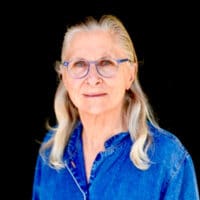
Joan Halifax

Roshi Joan Halifax, PhD, is a Buddhist teacher, Zen priest, anthropologist, and pioneer in the field of end-of-life care. Founder, abbot, and head teacher of Upaya Institute and Zen Center in Santa Fe, New Mexico, she received her PhD in medical anthropology in1973 while teaching at the University of Miami Medical School. She has been awarded a National Science Foundation fellowship in visual anthropology and an honorary research fellowship in medical ethnobotany at Harvard University, and was named a distinguished visiting scholar at the Library of Congress. From 1972–1975, she worked with psychiatrist Stanislav Grof at the Maryland Psychiatric Research Center with dying cancer patients. She has continued to work with dying people and their families, and she teaches healthcare professionals and family caregivers about the psychosocial, ethical, and spiritual aspects of caring for the dying. She is director of the Project on Being with Dying, and founder and director of the Upaya Prison Project, which has developed programs on meditation for prisoners. She studied with Zen teacher Seung Sahn, received the Lamp Transmission from Thich Nhat Hanh, and was given Inka by Roshi Bernie Glassman. A founding teacher of the Zen Peacemaker Order, her work and practice for more than four decades has focused on applied Buddhism.

John Dunne

John Dunne, PhD, holds the Distinguished Chair in Contemplative Humanities at the Center for Investigating Healthy Minds (CIHM) at the University of Wisconsin-Madison, with a joint appointment in the newly formed Department of Asian Languages and Cultures. His work focuses on Buddhist philosophy and contemplative practice, especially in dialogue with cognitive science. His publications include a monograph on Dharmakirti, and scientific studies of Buddhist contemplative practice with colleagues from various institutions, including the CIHM. His most recent work focuses on the nature of mindfulness in both theoretical and practical contexts. He was educated at the United States Air Force Academy, Amherst College, and Harvard University, where he received his PhD from the Committee on the Study of Religion in 1999.

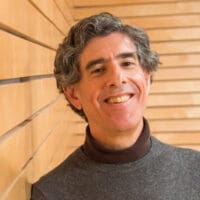
Richard Davidson

Richard J. Davidson, PhD, is the founder and chairman of the Center for Investigating Healthy Minds at the Waisman Center, and the director of the Laboratory for Affective Neuroscience and the Waisman Laboratory for Brain Imaging and Behavior, both at the University of Wisconsin–Madison. He was educated at New York University and Harvard University, where he received his bachelor’s of arts and PhD degrees, respectively, in psychology. Over the course of his research career, he has focused on the relationship between brain and emotion. He is currently the William James professor and Vilas research professor of psychology and psychiatry at the University of Wisconsin. He is co-author or editor of 13 books, including Visions of Compassion: Western Scientists and Tibetan Buddhists Examine Human Nature, The Handbook of Affective Science, and The Emotional Life of Your Brain. Davidson has published more than 300 chapters and journal articles, and is the recipient of numerous prestigious awards for his work, including the Research Scientist Award from the National Institute of Mental Health, the Distinguished Scientific Contribution Award from the American Psychological Association, and election to the American Academy of Arts and Sciences. He has served on the board of directors for the Mind & Life Institute since 1992. In 2006, Time named him one of the 100 most influential people in the world, and he received the first Mani Bhaumik Award from UCLA for advances in the understanding of the role of the brain and the conscious mind in healing.

William George