Introducing Pro-Sociality into Economic Systems

Introducing Pro-Sociality into Economic Systems

Overview

This session explores practical ways to embed altruism, responsibility, and sustainability into economic life, moving from theory to concrete models in finance, development, and grassroots action. Antoinette Hunziker-Ebneter argues that investors and financial institutions can promote sustainable quality of life by considering social, environmental, and governance factors alongside financial returns, shifting from short-term profit maximization toward long-term, purpose-driven investment and more responsible regulation. Arthur Vayloyan describes microfinance as a way to connect capital with people who lack access to conventional financial services, especially women, showing how small loans, group trust, and locally based institutions can help families build businesses, education, health, and security while still producing modest investment returns. Sanjit Bunker Roy presents the Barefoot College as a radically bottom-up development model that values the knowledge and capacities of poor rural communities, training largely illiterate villagers—especially grandmothers—to become teachers, engineers, and solar technicians and thereby strengthening local self-reliance, dignity, employment, education, and environmental sustainability. The Dalai Lama repeatedly emphasizes limits to material growth, the importance of inner development, and the need for transformation to begin at the village and grassroots level, while Matthieu Ricard highlights the growing role of small, committed NGOs in creating practical, low-cost, community-based alternatives. Overall, the discussion suggests that a more compassionate economy can emerge through responsible investment, inclusive finance, local empowerment, appropriate technology, and institutions that measure success not only by profit but by improvements in human well-being and community resilience.

Speakers

Antoinette Hunziker-Ebneter

Arthur Vayloyan

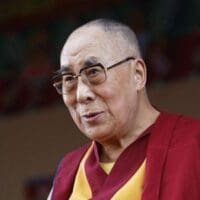
His Holiness The Dalai Lama

Tenzin Gyatso, the14th Dalai Lama, is the leader of Tibetan Buddhism and a spiritual leader revered worldwide. He was born on July 6, 1935, in a small village called Taktser in northeastern Tibet. Born to a peasant family, he was recognized at the age of two, in accordance with Tibetan tradition, as the reincarnation of his predecessor, the 13th Dalai Lama. The Dalai Lamas are manifestations of the Buddha of Compassion, who choose to reincarnate for the purpose of serving human beings. Winner of the Nobel Prize for Peace in 1989, he is universally respected as a spokesman for the compassionate and peaceful resolution of human conflict. He has traveled extensively, speaking on subjects including universal responsibility, love, compassion and kindness. Less well known is his intense personal interest in the sciences; he has said that if he were not a monk, he would have liked to be an engineer. As a youth in Lhasa it was he who was called on to fix broken machinery in the Potala Palace, be it a clock or a car. He has a vigorous interest in learning the newest developments in science, and brings to bear both a voice for the humanistic implications of the findings, and a high degree of intuitive methodological sophistication.

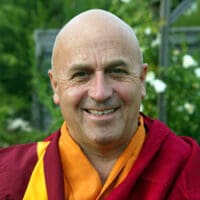
Matthieu Ricard

Matthieu Ricard, PhD, is a Buddhist monk at Schechen Monastery in Kathmandu, Nepal. Born in France in 1946, he received a PhD in cellular genetics at the Institut Pasteur under Nobel Laureate FrancoisJacob. As a hobby, he wrote Animal Migrations (1969).He first traveled to the Himalayas in 1967 and has lived there since 1972, studying with Kangyur Rinpoche and Dilgo Khyentse Rinpoche, two of the most eminent Tibetan teachers of our times. Since 1989, he has served as the French interpreter for His Holiness the Dalai Lama. He is the author of The Monk and the Philosopher (with his father, the French thinker Jean-Francois Revel); The Quantum and the Lotus (with the astrophysicist Trinh Xuan Thuan); Happiness, A Guide to Developing Life’s Most Import-ant Skill; and Why Meditate?. He has translated several books from Tibetan into English and French, including The Life of Shabkar and The Heart of Compassion.As a photographer, Matthieu has published several albums, including The Spirit of Tibet, Buddhist Himalayas, Tibet, Motionless Journey, and Bhutan. He devotes all of the proceeds from his books and much of his time to 120 humanitarian projects in Tibet, Nepal, and India—and to the preservation of the Tibetan cultural heritage—through his charitable association, Karuna-Shechen. Ricard has been deeply involved in the work of the Mind & Life Institute for many years.

Sanjit Bunker Roy