

Dialogue excerpt is not used
Search results for:
neuroscience
Mind & Life XIV – Session 1
Filmed during Mind & Life Institute’s “Mind & Life XIV: The Universe in a Single Atom” on April 9-13, 2007. Day One The Buddhism-Science Collaboration and the Limits of Scientific Knowledge: Exposing the Fracture PointsSPEAKER: Evan Thompson While science has made phenomenal progress in physics, cosmology and neuroscience, the juxtaposition of questions posed by the …
Neuroplasticity

Dialogue excerpt is not used
2004 Summer Research Institute
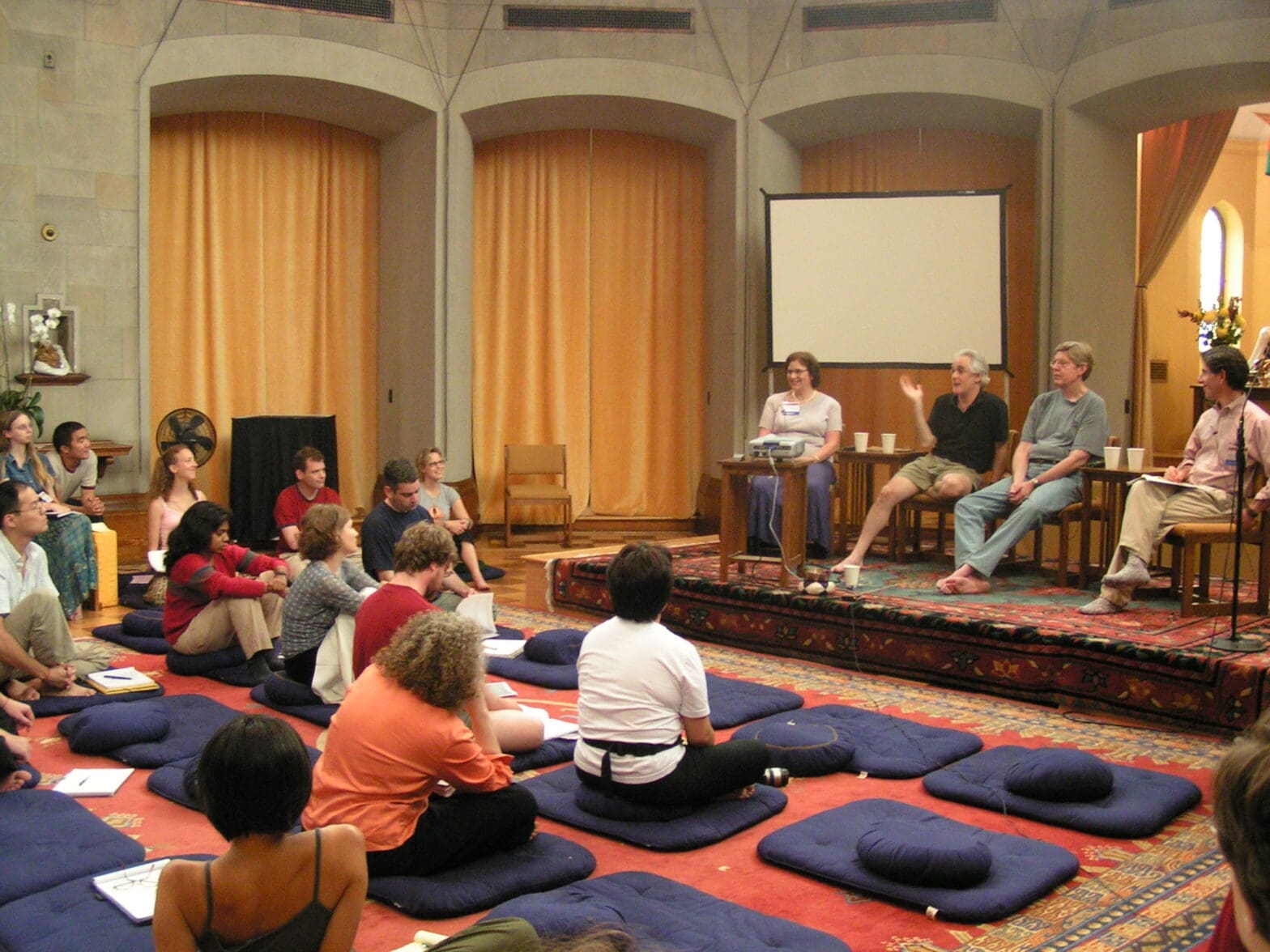
The purpose of the Mind and Life Summer Research Institute is to advance collaborative research among cognitive and affective neuroscientists and contemplative practitioners and scholars. The long-term objective is to advance the training of a new generation of cognitive/affective neuroscientists interested in exploring the influence of contemplative practice on mind, behavior, and brain function, including the potential role of contemplative methods for characterizing human experience and consciousness, and a new generation of contemplative scholars interested in expanding their knowledge of the modern mind sciences.
Mind & Life XI – Session 4
Filmed during Mind & Life Institute’s “Mind & Life XI: A Public Talk for New England” on September 14, 2003. Integration & Final Reflections From its inception Buddhism has probed the nature of mind, using the mind itself as its instrument of investigation, especially with the aid of refined meditation methods. For the past millennium, …
Mind & Life XI – Session 3
Filmed during Mind & Life Institute’s “Mind & Life XI: A Public Talk for New England” on September 14, 2003. Emotion From its inception Buddhism has probed the nature of mind, using the mind itself as its instrument of investigation, especially with the aid of refined meditation methods. For the past millennium, Tibetan Buddhists have …
Mind & Life XI – Session 2
Filmed during Mind & Life Institute’s “Mind & Life XI: A Public Talk for New England” on September 14, 2003. Mental Imagery From its inception Buddhism has probed the nature of mind, using the mind itself as its instrument of investigation, especially with the aid of refined meditation methods. For the past millennium, Tibetan Buddhists …
Mind & Life XI – Session 1
Filmed during Mind & Life Institute’s “Mind & Life XI: A Public Talk for New England” on September 14, 2003. Attention & Cognitive Control From its inception Buddhism has probed the nature of mind, using the mind itself as its instrument of investigation, especially with the aid of refined meditation methods. For the past millennium, …
Integration & Final Reflections
In this final session, we are interested in putting together the pieces: in understanding how both traditions understand the functional interrelations between attention, imagery, and emotion; and, more broadly, what each tradition understands the “mind” to be, and on what empirical basis.
Mental Imagery
What can modern science learn from Buddhist’s rich and virtually untapped database of phenomenological observation? What can traditional Buddhism learn from us?