The Mind & Life Institute

There’s good news and bad news. The bad news: civilization, as we know it, is about to end.
Now, the good news: civilization as we know it is about to end.
―Swami Beyondananda (aka Steve Bhaerman)
Ecodharma (or ecobuddhism) is a new development within modern Buddhism, applying traditional teachings to help us understand and respond to the ecological crisis. Since all forms of Asian Buddhism are premodern, none of them directly addresses our contemporary situation. But there are important implications that can shed light on our situation. For me, the most interesting is a remarkable parallel between the Buddhist teaching that the self is a kind of illusion—an inner construct that feels separate from the world outside—and our collective sense today of alienation from the rest of the biosphere. This raises the question: is the ecological crisis a larger version of our basic dualistic problem—the delusion of disconnection?
Perhaps our present predicament was predictable. Natural selection, the basic mechanism of biological evolution, rewards short-term focus on survival and reproduction, not long-term concern for the health of the ecosystems we are embedded within. Modern technologies have enabled rapid human population growth (with longer lifespans) and an economic system that also tends to keep expanding. The apparent implication is that sooner or later our now global civilization must bump up against the limits of the biosphere. Is that now?
Better tech (AI! more efficient solar panels and wind turbines!) may be an important part of the solution, but our characteristic reliance on a hi-tech salvation is also symptomatic of the larger challenge: increasing dependence on sophisticated, ever more powerful technologies tends to aggravate our collective sense of separation from the rest of the natural world.
Increasing dependence on sophisticated, ever more powerful technologies tends to aggravate our collective sense of separation from the rest of the natural world
Our dangerous situation today may not be unique. New telescopes have revealed that the observable universe may comprise up to two trillion galaxies, each with billions of stars; astronomers are also detecting thousands of exoplanets circling nearby stars. It seems highly unlikely that none of the other countless planets in the cosmos has evolved a biosphere with intelligent life. Wouldn’t their own technological evolution sooner or later tend to produce a similar bottleneck?
All civilizations, including those that might occur on other worlds, are expressions of their planet’s evolutionary history. From this perspective, our project of civilization is just one consequence of the Earth’s history, not its future master. Every civilization must be seen as a new form of biospheric activity arising within a planet’s history of transformation and evolutionary innovation…
Sustainable civilizations don’t “rise above” the biosphere, but must, in some way, enter into a long, cooperative relationship with their coupled planetary systems…. Our project of civilization must become a way for the planet to think, to decide, and to guide its own future. Thus, we must become the agent by which the Earth wakes up to itself.1
Frank, an astrophysicist, concludes that humanity up to this point in history has been a “cosmic teenager,” unable to take full responsibility for itself. Gaining an “astrobiological perspective” is essential in order to respond appropriately to the predicament we have created for ourselves. “It means recognizing that we and our project of civilization are nothing more than the fruit of the Earth’s ongoing evolutionary experiments. Any civilization on any planet will be nothing more than an expression of its home world’s creativity.”2
From a Buddhist perspective, the parallel between individual and collective dualisms makes us wonder what collective transformation might correspond to the individual awakening that Buddhism has traditionally promoted. “The Buddha attained individual awakening. Now we need a collective enlightenment to stop the course of destruction,” said Vietnamese Buddhist monk Thich Nhat Hanh.3 In both cases, what is needed is realizing our interdependence—with each other and with the earth—and learning to live in accord with those realizations. As Frank concludes: “It is time to grow up.” But how do we do that?
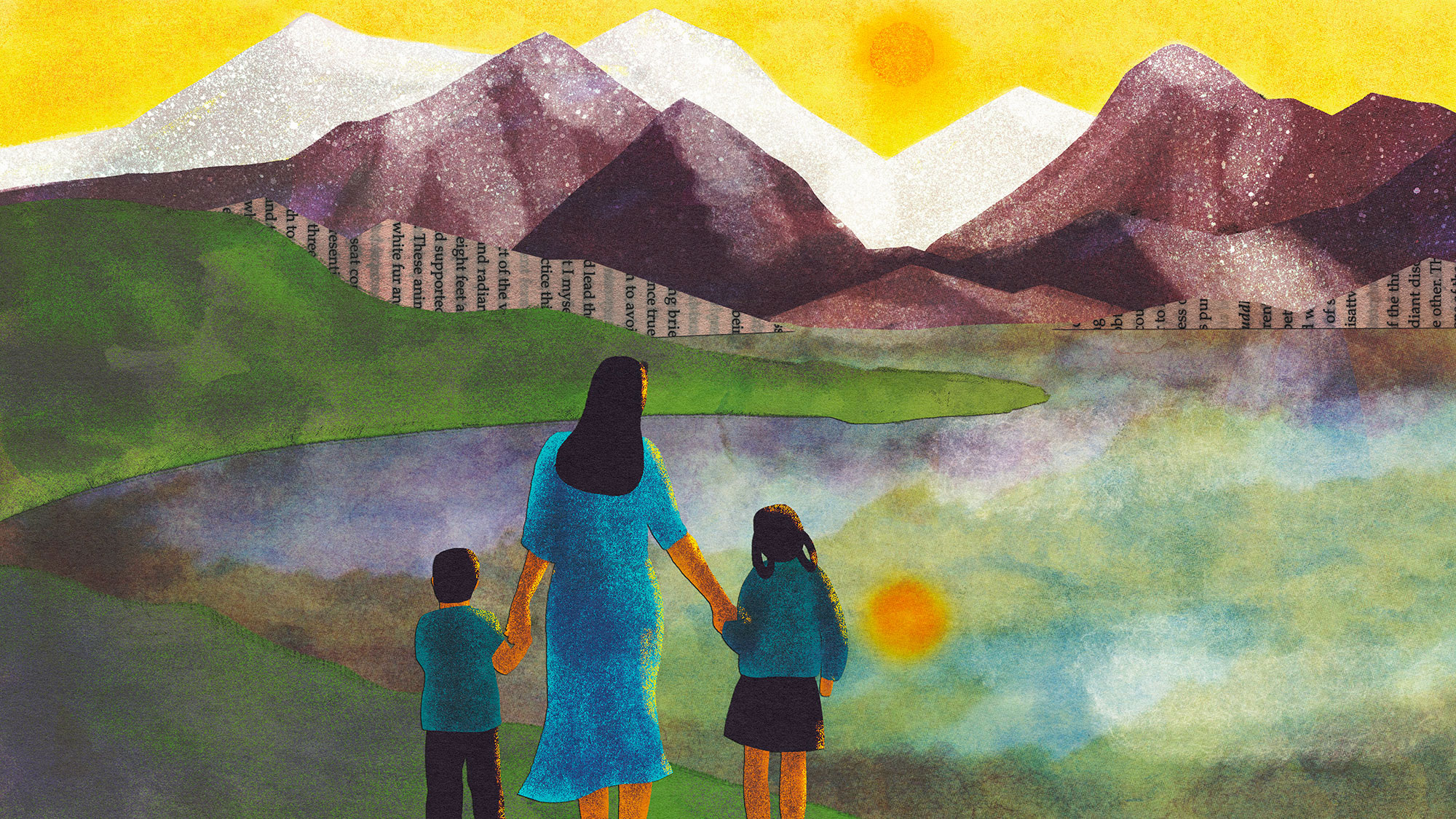
On a sunny July morning a group of meditators is sitting beside a creek in the Rocky Mountains of the western United States. The teacher gives instructions on paying attention to what is seen, heard, and felt, and any feelings of gratitude, joy, and love that might arise in response. On such a fine day, in such a lovely place, those feelings occur readily to most of the yogis. A day later, however, the instructions change, focusing on the damage we are doing to our planet: now the emotions that come up are more difficult: grief, guilt, fear, and anger.
When Chinese Chan master Yunmen (864-949 CE) was asked “What is the fruit of a lifetime of practice?” he replied: “Responding appropriately.” At the Rocky Mountain Ecodharma Retreat Center (RMERC) in Colorado, we have been doing our best to develop appropriate Buddhist responses to the ecological crisis by experimenting with various types of contemplative practices that can help us wake up to our precarious situation. So how does an ecodharma retreat differ from more traditional meditation retreats?
RMERC is an ideal location for such a retreat, with forest trails, alpine meadows, rocky crags, and a gently flowing creek. To realize the deeper truth of our non-separation—to understand that the natural world is not just a collection of resources for us to exploit but the very ground of our being—such direct contact with nature is very important. It is difficult to love something when we don’t have a relationship with it.
It is difficult to love something when we don’t have a relationship with it.
In fact, Buddhists have a good model for this kind of practice: Shakyamuni Buddha himself, whose meditations outside, in nature, culminated in his awakening under a riverside tree. According to the traditional story, he was challenged by Mara, a celestial demon king who tried to keep the Buddha from attaining enlightenment. “Who verifies your enlightenment?” she asked. The Buddha replied by touching the ground he sat upon: “The earth is my witness.”4
That story suggests a special relationship between the Buddha and the earth. What might happen if we practice the way he did?
A typical ecodharma retreat at RMERC is ten days or longer. When the weather is warm and dry, we are outdoors most of the time. The daily schedule, mostly in noble silence, includes mindfulness instruction, seated and hiking meditation, small group breakout sessions for sharing, and a dharma talk.
The first morning emphasizes bare sensory awareness. Instead of looking within—such as concentrating on the breath—the focus is on mindful hearing, seeing, and bodily sensing while sitting outside or walking on forest paths. Evening dharma talks are around the campfire. Following Joanna Macy’s spiral process, the initial talk is usually about gratitude: being thankful is not just something to occasionally feel, but a transformative practice to be cultivated, which nurtures the motivation and courage to work for the healing of the natural world and our relationship with it.5
Instructions the next day follow up by supplementing sensory awareness with deeper appreciation of nature. Yogis find a place that attracts them—maybe under a tree, or next to the creek—where they cultivate positive feelings such as affection and thankfulness. They are also encouraged to express those feelings in whatever way feels right. Some may bury their noses in a bunch of wildflowers; others hug a tree or whisper to it. Attention creates connection, connection leads to caring, and caring to a version of traditional Buddhist metta practice: may this tree be well, may all of us be well!
These gratitude practices serve to ground us for the difficult work that follows. The next few days are devoted to becoming more aware of the impact of the ecological crisis, with emphasis on our personal emotional responses. Despite the urgency of global heating, the climate emergency is only the tip of an iceberg that also includes a worldwide species extinction event; toxic chemicals in the water, air, earth, and our own bodies; microplastic pollution; loss of tropical forests and topsoil degradation (half of all agricultural topsoil eroded away during the last 150 years).6
The list is long, and to it must be added social justice concerns regarding racism and ethnicity, neocolonialism, gender, and class—always remembering that ecological degradation is affecting some people, most of them people of color and/or poor, much more than others. All of this points to a sobering reality: our now global civilization has lost its way, and converting to renewable sources of energy, essential though that is, cannot by itself fix what has gone wrong.
Those who register for an ecodharma retreat have at least some awareness of our predicament, but that is not the same as feeling what it really means. Many of us have suppressed our emotions, to some degree, as a way of managing the cognitive dissonance with our comfortable lifestyles. We try to ignore what we know or observe, and end up reinforcing a collective denial. But we can also help each other get in touch with our repressed grief and fears.
Many of us have suppressed our emotions, to some degree, as a way of managing the cognitive dissonance with our comfortable lifestyles.
Those emotions are so uncomfortable that we usually find ourselves focusing on something else. We argue about facts or strategies, or become angry at those whom we identify as responsible for the mess we’re in. We seek grounds for hope and, when hope fails us, we can fall into despair—the two sides of a future-preoccupation that shirks what is happening here and now. (No Buddhist text encourages hope, which would be considered a distraction from what is needed here and now.) Ironically, despair can be a relief: if there’s no hope, there’s no need for me to do anything. But embracing despair is not the same as enduring one’s grief.
Living together 24/7 develops interpersonal trust and a sense of community. We honor our pain for the world with Joanna Macy’s truth mandala ritual, sitting in a circle around four natural objects: a stone (representing fear), dry leaves (sorrow), a stick (anger), and an empty bowl (deprivation, emptiness). Participants take turns entering the center and grasping the symbols that help us express our own deepest feelings about what is happening. Sharing our vulnerability in this way, we also reveal—to others and to ourselves—our love for this earth.
The climax of the retreat is a two-day, two-night solo, when each person goes off to find their own wild spot, with a tent and sleeping bag. It is an opportunity to deepen one’s individual relationship with the natural world. People find their own way to communicate with the land, plants, and animals around them. Some fast. A few stay up late, sometimes all night, listening to what the darkness offers.
Afterwards we gather again and share what happened, often with tears or laughter—sometimes both. The solitude can help the week’s experiences integrate in a way that becomes empowering. Opening up to buried feelings is the not the end of the process. Can fear and grief transform into commitment, self-righteousness into generosity, our anger into determination?
The final day focuses on the ecosattva path, an ecological version of the traditional bodhisattva path emphasized in Mahayana Buddhism.7 Bodhisattvas have a double-sided spiritual practice: they continue to work on their own individual awakening, and that personal transformation also grounds their engagement with others. As our meditations deepen and the duality between self and other diminishes, compassion naturally arises and we feel motivated to respond. Although Buddhist teachings cannot tell us how to respond appropriately today, three contemplations—mindfulness practices—can help us work that out for ourselves:
What do I have to offer?
Given what I can offer, what are the good possibilities for me?
And which of those possibilities really calls to my heart?
In the context of don’t-know-mind—the inescapable mystery of not knowing what will happen, or even what is possible—this double practice enables action without attachment to results. No matter how grim the future may look, our task remains the same: to do the best we can, without knowing if our efforts will make any difference whatsoever. Has modern civilization already passed ecological tipping points, and what we are doing is hospice work? Although we don’t know if anything we do is important, it’s important for us to do it. When our actions become expressions of unconditional compassion, rather than fearful reactions to what may happen, they do not require particular outcomes to be nourishing.
Of course, the program summarized above is only one possible type of ecodharma retreat, and attending any kind of nature-oriented retreat is not a practical possibility for everyone. In and of themselves, such retreats will not solve the ecological challenge. But they point to something that contemporary Buddhism, along with other religions, needs to realize today: that the ecological crisis is just as much a crisis for our spiritual traditions. Insofar as they have focused on a transcendental escape to somewhere else (heaven, nirvana), salvation religions have abetted our destruction of the biosphere by fostering a devaluation of this world: this is only a theater where the drama of our eternal destiny is enacted, the place where we can qualify for something better.
The ecological crisis is just as much a crisis for our spiritual traditions.
If we could stop seeing ourselves as separate from the earth, which evolved us and continues to nurture us, what might that mean for our religious traditions?
Those who love the world as their own body
Can be entrusted with the world
―Daodejing
As Buddhism spread throughout Asia, it interacted with local Indigenous traditions, such as Daoism in China (creating Chan/Zen) and Bon shamanism in Tibet (Tibetan Buddhism). In that way, Buddhist emphasis on the impermanence and insubstantiality of everything—including itself—has helped to keep Buddhism a living, still evolving tradition, responding appropriately to new circumstances. The Christian theologian Paul Tillich developed what he called a theology of correlation: the answers that a religion has to offer should correspond to the questions that a culture is asking. If it fails at doing this, then it becomes irrelevant. That brings us back to the urgent issue: how might our spiritual traditions better respond to our situation today, a now-global civilization that seems to be self-destructing? Instead of trying to escape this vale of tears, can we realize what Buddhist emphasis on interdependence implies: that the earth is in fact our own body?
Although no religion today can ignore the challenges of science, there is another aspect to modernity that is often overlooked. When we think about globalization, what usually comes to mind are economic and technological developments, but there are other implications. Proliferating communication and transportation networks mean, among many other things, that our religious traditions cannot avoid becoming more familiar with each other and more aware of what others teach. So far, much of their response to this has been defensive or competitive, but it seems inevitable that the future will involve more dialogue, with increasing opportunities to share and learn from each other.
One of the most important things to learn from each other is that there is a tension within each tradition between world-devaluing doctrines (such as mentioned above) and more mystical teachings that emphasize personal transformation. To say it another way, perhaps what we need to transcend is not this world but our usual dualistic ways of experiencing and understanding it.
That brings us full circle, back to the starting point of this essay. Since there are a variety of Buddhisms, perhaps we should not be surprised that both viewpoints can be found within its many teachings. In fact, the same tension between transcendence and transformation can be found within every major religious tradition, when one looks for it. For more “this-worldly” perspectives emphasizing spiritual transformation here and now, see, among many other examples, the writings of Christian theologians such as Meister Eckhart, the great Islamic philosopher Ibn ‘Arabi, and the Daoist sages Laozi and Zhuangzi.
Ultimately, ecodharma cannot remain only a Buddhist development, if our spiritual traditions are to become part of the solution rather than remain part of the problem. That leaves us with the important question, whether any such changes in religious perspective can happen quickly enough to help us address our urgent ecological and social crises.
For further reading:
Dunne, J., & Goleman, D. (Eds.). (2018). Ecology, ethics, and interdependence: The Dalai Lama in conversation with thinkers on climate change. New York: Wisdom Publications.
Ives, C. (2025). Zen ecology: Green and engaged living in response to climate crisis. New York: Wisdom Publications.
Ives, C., & Williams, D. R. (2021). Buddhism and ecology bibliography. Forum on religion and ecology. Yale University. [Online]. Accessed September 2025.
Jenkins, Willis, Mary Evelyn Tucker, and John Grim, eds. Routledge Handbook of Religion and Ecology. London and New York: Routledge, 2017.
Dharma Rain: Sources of Buddhist Environmentalism, edited by Stephanie Kaza and Kenneth Kraft, 423-38. Boston: Shambhala, 2000.
Kaza, Stephanie, ed. A Wild Love for the World: Joanna Macy and the Work of Our Time. Boulder: Shambhala, 2020.
Kaza, Stephanie. Green Buddhism: Practice and Compassionate Action in Uncertain Times. Boulder: Shambhala, 2019
Notes
- 1.
Adam Frank. (2019). Light of the Stars: Alien Worlds and the Fate of the Earth. New York: W. W. Norton, 213-14, 222.
- 2.
Adam Frank. (2019), 224.
- 3.
This statement is widely attributed to Thich Nhat Hanh, but I haven’t been able to locate the original source. For his perspective on the ecological crisis, see The Bells of Mindfulness in Stanley, J., Loy, D. R., & Dorje, G. (Eds.). (2009). A Buddhist response to the climate emergency. New York: Wisdom Publications, 264-68.
- 4.
This popular story is not found in the Pali Canon but images of this bhumisparsha mudra, celebrating the Buddha’s victory over Mara, are very common.
- 5.
For the spiral of The Work That Reconnects, see, for example, Macy, J., & Johnstone, C. (2022). Active hope: How to face the mess we’re in with unexpected resilience and creative power. Revised Ed. New World Library, 37-42.
- 6.
World Wildlife Fund website, Soil Erosion and Degradation
- 7.
Loy, David R. (2018). Ecodharma: Buddhist teachings for the ecological crisis. New York: Wisdom Publications.