Day 4 Afternoon Discussion

Day 4 Afternoon Discussion

Overview

The dialogue explores recent developments in astronomy and cosmology, beginning with newly discovered planets, the search for extraterrestrial intelligence, and the Buddhist belief in countless world systems inhabited by sentient beings. The participants compare the organization and movement of planets, stars, galaxies, and galaxy clusters, then examine the cosmic afterglow, dark matter, a centerless Big Bang, and the possibility that the universe may be finite in time but infinite in space, oscillating, or part of a larger multiverse. The Dalai Lama contrasts the scientific idea of a possible beginning of space and time with the Buddhist view of a beginningless universe in which one world system emerges from the remnants of another, leading to an extended debate about causality, quantum randomness, determinism, free will, karma, and whether events can genuinely occur without causes. The discussion later considers physical laws, the observer’s participation in reality, the relationship between scientific and contemplative knowledge, and advanced meditative states in which time, space, and personal identity no longer appear to awareness.

Speakers

Anton Zeilinger

Arthur Zajonc

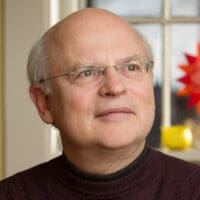
Arthur Zajonc, PhD, was professor of physics at Amherst College from 1978 to 2012, when he became President of the Mind & Life Institute. His research has included studies in electron-atom physics, parity violation in atoms, quantum optics, the experimental foundations of quantum physics, and the relationship between science, the humanities and the contemplative traditions. He has also written extensively on Goethe’s science work. He is author of the book: Catching the Light, co-author of The Quantum Challenge, and co-editor of Goethe’s Way of Science. In 1997, he served as scientific coordinator for the Mind and Life dialogue published as The New Physics and Cosmology: Dialogues with the Dalai Lama. He organized the 2002 dialogue with the Dalai Lama, “The Nature of Matter, the Nature of Life,” and acted as moderator at MIT for the “Investigating the Mind” Mind and Life dialogue in 2003, the proceedings of which were published under the title The Dalai Lama at MIT. While directing the Center for Contemplative Mind in Society, Arthur fostered the use of contemplative practice in college and university classrooms, and he continues to speak around the world on the importance of contemplative pedagogy. Out of this work and his long-standing meditative practice, Zajonc has most recently authored Meditation as Contemplative Inquiry: When Knowing Becomes Love. He has also been General Secretary of the Anthroposophical Society in America, a co-founder of the Kira Institute, president of the Lindisfarne Association, and a senior program director at the Fetzer Institute.

David Finkelstein

George Greenstein

His Holiness The Dalai Lama

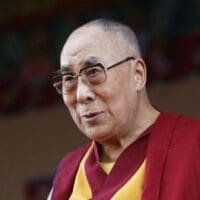
Tenzin Gyatso, the14th Dalai Lama, is the leader of Tibetan Buddhism and a spiritual leader revered worldwide. He was born on July 6, 1935, in a small village called Taktser in northeastern Tibet. Born to a peasant family, he was recognized at the age of two, in accordance with Tibetan tradition, as the reincarnation of his predecessor, the 13th Dalai Lama. The Dalai Lamas are manifestations of the Buddha of Compassion, who choose to reincarnate for the purpose of serving human beings. Winner of the Nobel Prize for Peace in 1989, he is universally respected as a spokesman for the compassionate and peaceful resolution of human conflict. He has traveled extensively, speaking on subjects including universal responsibility, love, compassion and kindness. Less well known is his intense personal interest in the sciences; he has said that if he were not a monk, he would have liked to be an engineer. As a youth in Lhasa it was he who was called on to fix broken machinery in the Potala Palace, be it a clock or a car. He has a vigorous interest in learning the newest developments in science, and brings to bear both a voice for the humanistic implications of the findings, and a high degree of intuitive methodological sophistication.

Piet Hut

Tu Weiming