Neurobiology of Sleep, Pt. 3

Neurobiology of Sleep, Pt. 3

Overview

This presentation is an introduction to the current understanding of sleeping and dreaming from the point of view of the underlying human biology and physiology. In fact, the physiology of sleep has been one of the oldest and most active fields of research in modern neuroscience. New phenomena such as paradoxical sleep, the circadian organization of sleeping cycles, and major mechanisms at the neurochemical and single neuron level have been elucidated in detail. Such material will constitute the scientific background for the ensuing discussion.

  • Dialogue 4
    16 sessions
  • October 5, 1992
    Dharamsala, Himachal Pradesh, India
  • share

Speakers

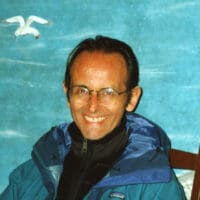
Francisco Varela

Francisco J. Varela (1946-2001) co-founded the Mind & Life Institute in 1987. Born in Chile, he received his PhD in Biology from Harvard University in 1970. Trained as a biologist, mathematician, and philosopher, he wrote and edited numerous books and journal articles on biology, neurology, cognitive science, mathematics, and philosophy. Francisco introduced the concept of autopoiesis to biology and supported embodied philosophy, viewing human cognition and consciousness in terms of the enactive structures in which they arise. His work popularized within the field of neuroscience the concept of neurophenomenology, which requires observers to examine their own conscious experience using scientifically verifiable methods. His book The Embodied Mind: Cognitive Science and Human Experience (1991), co-authored with Evan Thompson and Eleanor Rosch, is considered a classic in the field of cognitive science, offering pioneering phenomenological connections and introducing the Buddhism-informed enactivist and embodied cognition approach. In 2004, Mind & Life launched the Francisco J. Varela Research Grants to support the examination of contemplative techniques and their application to reducing human suffering and promote flourishing.