Session 4 – Comments from the Dalai Lama and Panelists

Session 4 – Comments from the Dalai Lama and Panelists

Overview

This closing dialogue at Mayo Clinic explores compassion, mindfulness, dying, resilience, and the relationship between contemplative practice and medicine. The Dalai Lama emphasizes that a “good death” involves helping a dying person remain calm and peaceful, with family and caregivers creating a supportive atmosphere suited to the individual, while clinicians caring for difficult patients may need both patience and, at times, a form of compassionate firmness or “tough love.” The discussion also addresses how hardship can produce insight and resilience, and cautions against simplistic claims that thoughts alone cause or cure illness; instead, mindfulness and mental training may influence coping, stress, healing processes, and physiology while remaining only one factor among many. Compassion is presented as deeply beneficial to the person who cultivates it, especially when guided by wisdom so that it does not become passive or “foolish compassion,” and the Dalai Lama distinguishes empathy from a more active compassion that includes both the wish to relieve suffering and the courage to act on its causes. He also links compassion with equanimity, arguing that recognizing the fundamental equality of self and others helps overcome bias and makes broader compassion possible, and he describes Buddhism and science as potentially complementary domains, particularly where scientific study of mind can meet Buddhist inquiry into mental processes. The session ends with a practical message to clinicians: beyond technical competence, patients need warmth, presence, and genuine human concern, and the long-term work of doctors and nurses is itself a profound service to humanity and a source of hope.

Speakers

Amit Sood

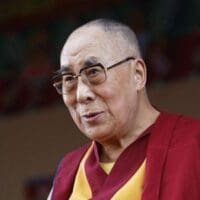
His Holiness The Dalai Lama

Tenzin Gyatso, the14th Dalai Lama, is the leader of Tibetan Buddhism and a spiritual leader revered worldwide. He was born on July 6, 1935, in a small village called Taktser in northeastern Tibet. Born to a peasant family, he was recognized at the age of two, in accordance with Tibetan tradition, as the reincarnation of his predecessor, the 13th Dalai Lama. The Dalai Lamas are manifestations of the Buddha of Compassion, who choose to reincarnate for the purpose of serving human beings. Winner of the Nobel Prize for Peace in 1989, he is universally respected as a spokesman for the compassionate and peaceful resolution of human conflict. He has traveled extensively, speaking on subjects including universal responsibility, love, compassion and kindness. Less well known is his intense personal interest in the sciences; he has said that if he were not a monk, he would have liked to be an engineer. As a youth in Lhasa it was he who was called on to fix broken machinery in the Potala Palace, be it a clock or a car. He has a vigorous interest in learning the newest developments in science, and brings to bear both a voice for the humanistic implications of the findings, and a high degree of intuitive methodological sophistication.

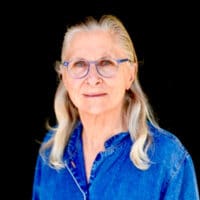
Joan Halifax

Roshi Joan Halifax, PhD, is a Buddhist teacher, Zen priest, anthropologist, and pioneer in the field of end-of-life care. Founder, abbot, and head teacher of Upaya Institute and Zen Center in Santa Fe, New Mexico, she received her PhD in medical anthropology in1973 while teaching at the University of Miami Medical School. She has been awarded a National Science Foundation fellowship in visual anthropology and an honorary research fellowship in medical ethnobotany at Harvard University, and was named a distinguished visiting scholar at the Library of Congress. From 1972–1975, she worked with psychiatrist Stanislav Grof at the Maryland Psychiatric Research Center with dying cancer patients. She has continued to work with dying people and their families, and she teaches healthcare professionals and family caregivers about the psychosocial, ethical, and spiritual aspects of caring for the dying. She is director of the Project on Being with Dying, and founder and director of the Upaya Prison Project, which has developed programs on meditation for prisoners. She studied with Zen teacher Seung Sahn, received the Lamp Transmission from Thich Nhat Hanh, and was given Inka by Roshi Bernie Glassman. A founding teacher of the Zen Peacemaker Order, her work and practice for more than four decades has focused on applied Buddhism.

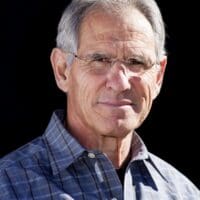
Jon Kabat-Zinn

Jon Kabat-Zinn, Ph.D. did his doctoral work in molecular biology at MIT, in the laboratory of the Nobel Laureate Salvador Luria. Kabat-Zinn is Professor of Medicine emeritus at the University of Massachusetts Medical School, where he founded the Center for Mindfulness in Medicine, Health Care, and Society (in 1995), and (in 1979) its world-renown Mindfulness-Based Stress Reduction (MBSR) Clinic. He is the author of 14 books, published in over 45 languages. His work has contributed to a growing movement of mindfulness into mainstream institutions such as medicine, psychology, health care, neuroscience, schools, higher education, business, social justice, criminal justice, prisons, the law, technology, government, and professional sports. Over 700 hospitals and medical centers around the world now offer MBSR. Jon lectures and leads mindfulness workshops and retreats around the world.

Linda Carlson

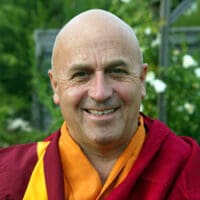
Matthieu Ricard

Matthieu Ricard, PhD, is a Buddhist monk at Schechen Monastery in Kathmandu, Nepal. Born in France in 1946, he received a PhD in cellular genetics at the Institut Pasteur under Nobel Laureate FrancoisJacob. As a hobby, he wrote Animal Migrations (1969).He first traveled to the Himalayas in 1967 and has lived there since 1972, studying with Kangyur Rinpoche and Dilgo Khyentse Rinpoche, two of the most eminent Tibetan teachers of our times. Since 1989, he has served as the French interpreter for His Holiness the Dalai Lama. He is the author of The Monk and the Philosopher (with his father, the French thinker Jean-Francois Revel); The Quantum and the Lotus (with the astrophysicist Trinh Xuan Thuan); Happiness, A Guide to Developing Life’s Most Import-ant Skill; and Why Meditate?. He has translated several books from Tibetan into English and French, including The Life of Shabkar and The Heart of Compassion.As a photographer, Matthieu has published several albums, including The Spirit of Tibet, Buddhist Himalayas, Tibet, Motionless Journey, and Bhutan. He devotes all of the proceeds from his books and much of his time to 120 humanitarian projects in Tibet, Nepal, and India—and to the preservation of the Tibetan cultural heritage—through his charitable association, Karuna-Shechen. Ricard has been deeply involved in the work of the Mind & Life Institute for many years.

Richard Davidson

Richard J. Davidson, PhD, is the founder and chairman of the Center for Investigating Healthy Minds at the Waisman Center, and the director of the Laboratory for Affective Neuroscience and the Waisman Laboratory for Brain Imaging and Behavior, both at the University of Wisconsin–Madison. He was educated at New York University and Harvard University, where he received his bachelor’s of arts and PhD degrees, respectively, in psychology. Over the course of his research career, he has focused on the relationship between brain and emotion. He is currently the William James professor and Vilas research professor of psychology and psychiatry at the University of Wisconsin. He is co-author or editor of 13 books, including Visions of Compassion: Western Scientists and Tibetan Buddhists Examine Human Nature, The Handbook of Affective Science, and The Emotional Life of Your Brain. Davidson has published more than 300 chapters and journal articles, and is the recipient of numerous prestigious awards for his work, including the Research Scientist Award from the National Institute of Mental Health, the Distinguished Scientific Contribution Award from the American Psychological Association, and election to the American Academy of Arts and Sciences. He has served on the board of directors for the Mind & Life Institute since 1992. In 2006, Time named him one of the 100 most influential people in the world, and he received the first Mani Bhaumik Award from UCLA for advances in the understanding of the role of the brain and the conscious mind in healing.