Virtues and Vices

Virtues and Vices

Overview

Daniel Goleman opens the Dialogue by introducing its central inquiry: how emotional states such as anger, joy, and calm affect physical health, and how Western science and Buddhist thought might deepen one another’s understanding of this relationship. Lee Yearley then provides a philosophical framework for the discussion, arguing that scientific, religious, and humanistic approaches each offer distinct and necessary ways of understanding human experience. Drawing on William James, he emphasizes the importance of studying religious experience, allowing traditions to evolve, and keeping the alleviation of suffering at the center of inquiry. Yearley also outlines three approaches to Western ethics—individualism, perfectionism, and rationalism—and examines why compassion alone may be insufficient as a foundation for ethics if it does not also address equality, justice, and the social conditions that produce suffering. He concludes that contemporary ethical thought should bring ideals of virtue and human flourishing into conversation with reason and universal principles.

Speakers

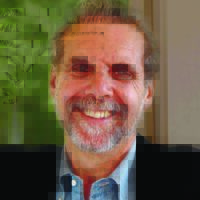
Daniel Goleman

Daniel Goleman, PhD, is a psychologist and science writer best-known for his worldwide best-seller Emotional Intelligence, published in 40 languages. He taught at Harvard University before becoming an editor and journalist, covering the brain and behavioral science for the New York Times. He is a co-founder of the Collaborative for Academic, Social, and Emotional Learning at the University of Illinois, and co-director of the Consortium for Research on Emotional Intelligence in Organizations at Rutgers University. He received his Ph.D. in psychology from Harvard University. For two years he traveled in India studying Buddhist and other spiritual systems of psychology, the first year as a Harvard Traveling Fellow, the second as a Research Fellow of the Social Science Research Council. He is a Fellow of the American Association for the Advancement of Science, and has received many awards for his writing. He is the author of numerous books, including The Meditative Mind, Destructive Emotions, Social Intelligence, and, most recently, Ecological Intelligence.

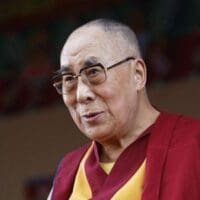
His Holiness The Dalai Lama

Tenzin Gyatso, the14th Dalai Lama, is the leader of Tibetan Buddhism and a spiritual leader revered worldwide. He was born on July 6, 1935, in a small village called Taktser in northeastern Tibet. Born to a peasant family, he was recognized at the age of two, in accordance with Tibetan tradition, as the reincarnation of his predecessor, the 13th Dalai Lama. The Dalai Lamas are manifestations of the Buddha of Compassion, who choose to reincarnate for the purpose of serving human beings. Winner of the Nobel Prize for Peace in 1989, he is universally respected as a spokesman for the compassionate and peaceful resolution of human conflict. He has traveled extensively, speaking on subjects including universal responsibility, love, compassion and kindness. Less well known is his intense personal interest in the sciences; he has said that if he were not a monk, he would have liked to be an engineer. As a youth in Lhasa it was he who was called on to fix broken machinery in the Potala Palace, be it a clock or a car. He has a vigorous interest in learning the newest developments in science, and brings to bear both a voice for the humanistic implications of the findings, and a high degree of intuitive methodological sophistication.

Lee Yearley