Issues Concerning Mind And Brain with Dr. Patricia Smith Churchland

Issues Concerning Mind And Brain with Dr. Patricia Smith Churchland

Overview

The discussion brings together the Dalai Lama and Western neuroscientists to explore the relationship between the brain, mind, consciousness, and Buddhist philosophy. The scientists emphasize that the brain is highly dynamic and argue that perception, memory, emotion, thought, and consciousness are closely dependent on physical brain processes, citing evidence from brain injury, stimulation, drugs, degeneration, development, and neuroscience research. Patricia Churchland contrasts this materialist view with Cartesian dualism, which treats mind or soul as distinct from the body, and explains why most neuroscientists find dualism increasingly implausible. The Dalai Lama agrees that many ordinary or “gross” forms of sensory and mental awareness depend on the brain but presents the Buddhist view that consciousness has multiple levels, including a very subtle continuum of awareness that may exist independently of the body and continue through conception, death, and rebirth. The conversation repeatedly distinguishes what science has observed from what it can definitively prove, especially regarding whether every mental event must have a physical cause and when consciousness begins during fetal development. Despite their disagreements, both sides approach the exchange as an opportunity for mutual learning, with the Dalai Lama expressing strong interest in experimental neuroscience and the scientists acknowledging the complexity of consciousness and the limits of current knowledge.

  • Dialogue 2
    6 sessions
  • October 5, 1989
    Dharamsala, Himachal Pradesh, India
  • share

Speakers

His Holiness The Dalai Lama

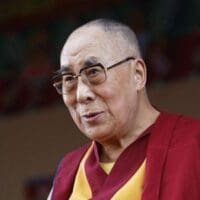
Tenzin Gyatso, the14th Dalai Lama, is the leader of Tibetan Buddhism and a spiritual leader revered worldwide. He was born on July 6, 1935, in a small village called Taktser in northeastern Tibet. Born to a peasant family, he was recognized at the age of two, in accordance with Tibetan tradition, as the reincarnation of his predecessor, the 13th Dalai Lama. The Dalai Lamas are manifestations of the Buddha of Compassion, who choose to reincarnate for the purpose of serving human beings. Winner of the Nobel Prize for Peace in 1989, he is universally respected as a spokesman for the compassionate and peaceful resolution of human conflict. He has traveled extensively, speaking on subjects including universal responsibility, love, compassion and kindness. Less well known is his intense personal interest in the sciences; he has said that if he were not a monk, he would have liked to be an engineer. As a youth in Lhasa it was he who was called on to fix broken machinery in the Potala Palace, be it a clock or a car. He has a vigorous interest in learning the newest developments in science, and brings to bear both a voice for the humanistic implications of the findings, and a high degree of intuitive methodological sophistication.

Patricia Smith Churchland

Patricia SmithChurchland is Professor of Philosophy at the University of California San Diego. She received her Bachelor's degree (with Honors), at the University of British Colombia, a Master's degree at the University of Pittsburg, and a B.Phil at Oxford University. She taught at the University of Manitoba, becoming a full Professor there in 1983, following a year as visiting member, Institute for Advanced Study, Princeton University. She has received a conspicuous number of distinguished awards and fellowships, has been the past President of the Society for Philosophy and Psychology, and is the author of Neurophilosophy: Toward a Unified Science of the Mind/Brain, published by MIT Press.

Robert B. Livingston

Robert Livingston is Professor of Neurosciences Emeritus at UCSD. He received his undergraduate and medical degrees from Stanford University. Prior to founding the world's first Department of Neurosciences, the first department in the new School of Medicine at UCSD in 1965; he taught Neuropathology at Stanford, Neurophysiology at Yale, Psychiatry at Harvard, and Physiology and Anatomy at the UCLA Medical School. He also served as Executive Assistant to the President of the National Academy of Sciences and Chairman of the National Research Council; and as Scientific Director for both the National Institute of Mental Health and the National Institute of Neurological Diseases and Blindness. Livingston has held research and teaching fellowships at the Université de Genève, Collège de France, Oxford University, Göteborg University, University of Hawaii, and University ofZürich. He is active in Physicians for Social Responsibility, International Physicians for the Prevention of Nuclear War, and Beyond War. He participated in the founding of the Council for a Livable World, the Institute for Policy Studies and the Elmwood Institute.