How Brain Damage in Specific Brain Regions Affects Perception, Recognition and Language with Dr. Antonio R. Damassio

How Brain Damage in Specific Brain Regions Affects Perception, Recognition and Language with Dr. Antonio R. Damassio

Overview

Damage to specific brain regions can alter the experience of color, the recognition of faces, and the ability to translate thoughts into language or vice-versa. The cognitive and neural study of patients with such disorders, reveals new aspects of brain organization and indicates that complex psychological functions depend on relatively separate collections of interacting brain regions.

  • Dialogue 2
    6 sessions
  • October 5, 1989
    Dharamsala, Himachal Pradesh, India
  • share

Speakers

Antonio R. Damasio

Antonio R. Damasio is Van Allen Professor and Head of the Department of Neurology, at the University of Iowa College of Medicine, and Adjunct Professor at the Salk Institute. He received both his MD and his doctorate from the University of Lisbon, and began his research in behavioral neuroscience with the late Norman Geschwind, Putnam Professor of Neurology at Harvard Medical School. He joined the faculty at the University of Iowa in 1976, where he has been Chief of the Division of Behavioral Neurology and Cognitive Neuroscience, and Director of the Alzheimer's Disease Research Center. Dr. Damasio's bibliography lists more than 200 titles, devoted to the understanding of the cerebral basis of vision, memory, and language, and the elucidation of diseases such as Alzheimer's. His new model of neural architecture subserving cognitive processes is being published this year in the journals of Neural Computation and Cognition. He is a member of the American Neurological Association, a Fellow of the American Academy of Neurology, and is a Past President of the Academy of Aphasia and of the Behavioral Neurology Society.

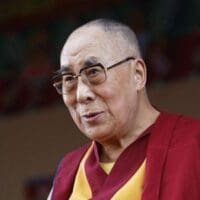
His Holiness The Dalai Lama

Tenzin Gyatso, the14th Dalai Lama, is the leader of Tibetan Buddhism and a spiritual leader revered worldwide. He was born on July 6, 1935, in a small village called Taktser in northeastern Tibet. Born to a peasant family, he was recognized at the age of two, in accordance with Tibetan tradition, as the reincarnation of his predecessor, the 13th Dalai Lama. The Dalai Lamas are manifestations of the Buddha of Compassion, who choose to reincarnate for the purpose of serving human beings. Winner of the Nobel Prize for Peace in 1989, he is universally respected as a spokesman for the compassionate and peaceful resolution of human conflict. He has traveled extensively, speaking on subjects including universal responsibility, love, compassion and kindness. Less well known is his intense personal interest in the sciences; he has said that if he were not a monk, he would have liked to be an engineer. As a youth in Lhasa it was he who was called on to fix broken machinery in the Potala Palace, be it a clock or a car. He has a vigorous interest in learning the newest developments in science, and brings to bear both a voice for the humanistic implications of the findings, and a high degree of intuitive methodological sophistication.