From Life to Lab: Early Adversity, Brain Circuitry, and the Emergence of Well-Being

From Life to Lab: Early Adversity, Brain Circuitry, and the Emergence of Well-Being

Overview

Newborns enter the world enveloped in profoundly varied environments. The first few years of life constitute a particularly sensitive period during which adversity and advantage shape the developing brain and body, with potentially long lasting residue. This talk will begin with a vignette about two individual neonates who are part of a longitudinal study in which we are engaged. These neonates came into the world in very different circumstances and the social environment in their first year of life serves to illustrate the range of early life circumstances that can profoundly shape the developing brain and body. These circumstances will be described and their effects on early stress hormones and later brain function and structure when these individuals emergence into adolescence will be explained. The findings strongly support the view that early life adversity is a more powerful driver of later brain and social development than challenges that emerge in adolescence. The fact of neuroplasticity invites the consideration that we might use behavioral and mental training procedures to impact and in certain cases, reverse the effects of early adversity, particularly when these interventions are deployed early in life. Illustrations from both contemplative and Western methods to foster greater emotional balance and to promote well-being will be featured and the impact of these early interventions on brain function and structure and on peripheral biology will be described. Collectively, these findings underscore the powerful role that early experience has on shaping the brain and body and highlight the role that behavioral and mental training might have in the promotion of well-being and suggest that emotion regulation, well-being and flourishing are best regarded as the product of skills that can be enhanced through training.

Speakers

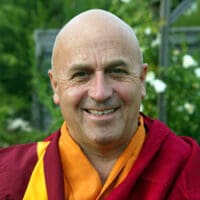
Matthieu Ricard

Matthieu Ricard, PhD, is a Buddhist monk at Schechen Monastery in Kathmandu, Nepal. Born in France in 1946, he received a PhD in cellular genetics at the Institut Pasteur under Nobel Laureate FrancoisJacob. As a hobby, he wrote Animal Migrations (1969).He first traveled to the Himalayas in 1967 and has lived there since 1972, studying with Kangyur Rinpoche and Dilgo Khyentse Rinpoche, two of the most eminent Tibetan teachers of our times. Since 1989, he has served as the French interpreter for His Holiness the Dalai Lama. He is the author of The Monk and the Philosopher (with his father, the French thinker Jean-Francois Revel); The Quantum and the Lotus (with the astrophysicist Trinh Xuan Thuan); Happiness, A Guide to Developing Life’s Most Import-ant Skill; and Why Meditate?. He has translated several books from Tibetan into English and French, including The Life of Shabkar and The Heart of Compassion.As a photographer, Matthieu has published several albums, including The Spirit of Tibet, Buddhist Himalayas, Tibet, Motionless Journey, and Bhutan. He devotes all of the proceeds from his books and much of his time to 120 humanitarian projects in Tibet, Nepal, and India—and to the preservation of the Tibetan cultural heritage—through his charitable association, Karuna-Shechen. Ricard has been deeply involved in the work of the Mind & Life Institute for many years.

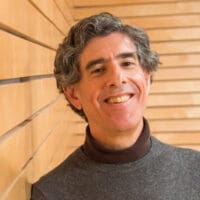
Richard Davidson

Richard J. Davidson, PhD, is the founder and chairman of the Center for Investigating Healthy Minds at the Waisman Center, and the director of the Laboratory for Affective Neuroscience and the Waisman Laboratory for Brain Imaging and Behavior, both at the University of Wisconsin–Madison. He was educated at New York University and Harvard University, where he received his bachelor’s of arts and PhD degrees, respectively, in psychology. Over the course of his research career, he has focused on the relationship between brain and emotion. He is currently the William James professor and Vilas research professor of psychology and psychiatry at the University of Wisconsin. He is co-author or editor of 13 books, including Visions of Compassion: Western Scientists and Tibetan Buddhists Examine Human Nature, The Handbook of Affective Science, and The Emotional Life of Your Brain. Davidson has published more than 300 chapters and journal articles, and is the recipient of numerous prestigious awards for his work, including the Research Scientist Award from the National Institute of Mental Health, the Distinguished Scientific Contribution Award from the American Psychological Association, and election to the American Academy of Arts and Sciences. He has served on the board of directors for the Mind & Life Institute since 1992. In 2006, Time named him one of the 100 most influential people in the world, and he received the first Mani Bhaumik Award from UCLA for advances in the understanding of the role of the brain and the conscious mind in healing.