Dialogue with His Holiness and Audience Q&A

Dialogue with His Holiness and Audience Q&A

Overview

The discussion explores how health and well-being are deeply connected to purpose, service, and relationships, particularly in aging and at the end of life. The panelists describe how meaningful activities, social connection, and caring for others can reduce loneliness, strengthen resilience, and help people live more fully. His Holiness the Dalai Lama emphasizes recognizing our shared humanity, cultivating compassion beyond our immediate circles, and becoming familiar with impermanence and death so that we can meet life’s end with less fear and regret. The conversation also distinguishes attachment based on personal preference from an inclusive concern for the well-being of all and frames self-discipline as a form of self-protection guided by long-term consequences. Ultimately, the panel calls for scientific insights about compassion, emotional regulation, aging, and well-being to move beyond research and into secular education, healthcare, and wider society.

Speakers

David Spiegel

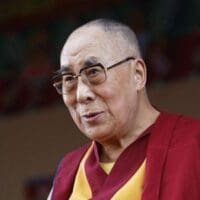
His Holiness The Dalai Lama

Tenzin Gyatso, the14th Dalai Lama, is the leader of Tibetan Buddhism and a spiritual leader revered worldwide. He was born on July 6, 1935, in a small village called Taktser in northeastern Tibet. Born to a peasant family, he was recognized at the age of two, in accordance with Tibetan tradition, as the reincarnation of his predecessor, the 13th Dalai Lama. The Dalai Lamas are manifestations of the Buddha of Compassion, who choose to reincarnate for the purpose of serving human beings. Winner of the Nobel Prize for Peace in 1989, he is universally respected as a spokesman for the compassionate and peaceful resolution of human conflict. He has traveled extensively, speaking on subjects including universal responsibility, love, compassion and kindness. Less well known is his intense personal interest in the sciences; he has said that if he were not a monk, he would have liked to be an engineer. As a youth in Lhasa it was he who was called on to fix broken machinery in the Potala Palace, be it a clock or a car. He has a vigorous interest in learning the newest developments in science, and brings to bear both a voice for the humanistic implications of the findings, and a high degree of intuitive methodological sophistication.

Jimmie Holland

Lis Nielsen

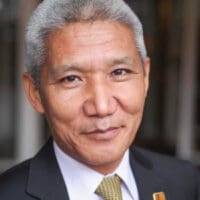
Thupten Jinpa

Thupten Jinpa, PhD, was trained as a monk at the Shartse College of Ganden Monastic University, South India, where he received the Geshe Lharam degree. In addition, Jinpa holds a bachelor’s honors degree in philosophy and a PhD in religious studies, both from Cambridge University. He taught at Ganden monastery and worked as a research fellow in Eastern religions at Girton College, Cambridge University. Jinpa has been the principal English translator to His Holiness the Dalai Lama since 1985 and has translated and edited numerous books by the Dalai Lama, including the New York Times best-sellers Ethics for the New Millennium and The Art of Happiness, as well as Beyond Religion, Universe in a Single Atom, and Transforming the Mind. His own publications include, in addition to numerous Tibetan works, Essential Mind Training; Wisdom of the Kadam Masters; Self, Reality, and Reason in Tibetan Philosophy: Tsongkhapa’s Quest for the Middle View; as well as translations of major Tibetan works featured in The Library of Tibetan Classics series. He is the main author of Compassion Cultivation Training (CCT), an eight-week formal program developed at the Center for Compassion and Altruism Research and Education (CCARE) at Stanford University. Jinpa is an adjunct professor on the faculty of religious studies at McGill University, Montreal; the founder and president of the Institute of Tibetan Classics, Montreal; and the general series editor of The Library of Tibetan Classics series. He has been a core member of the Mind & Life Institute from its inception. Jinpa lives in Montreal and is married with two daughters.