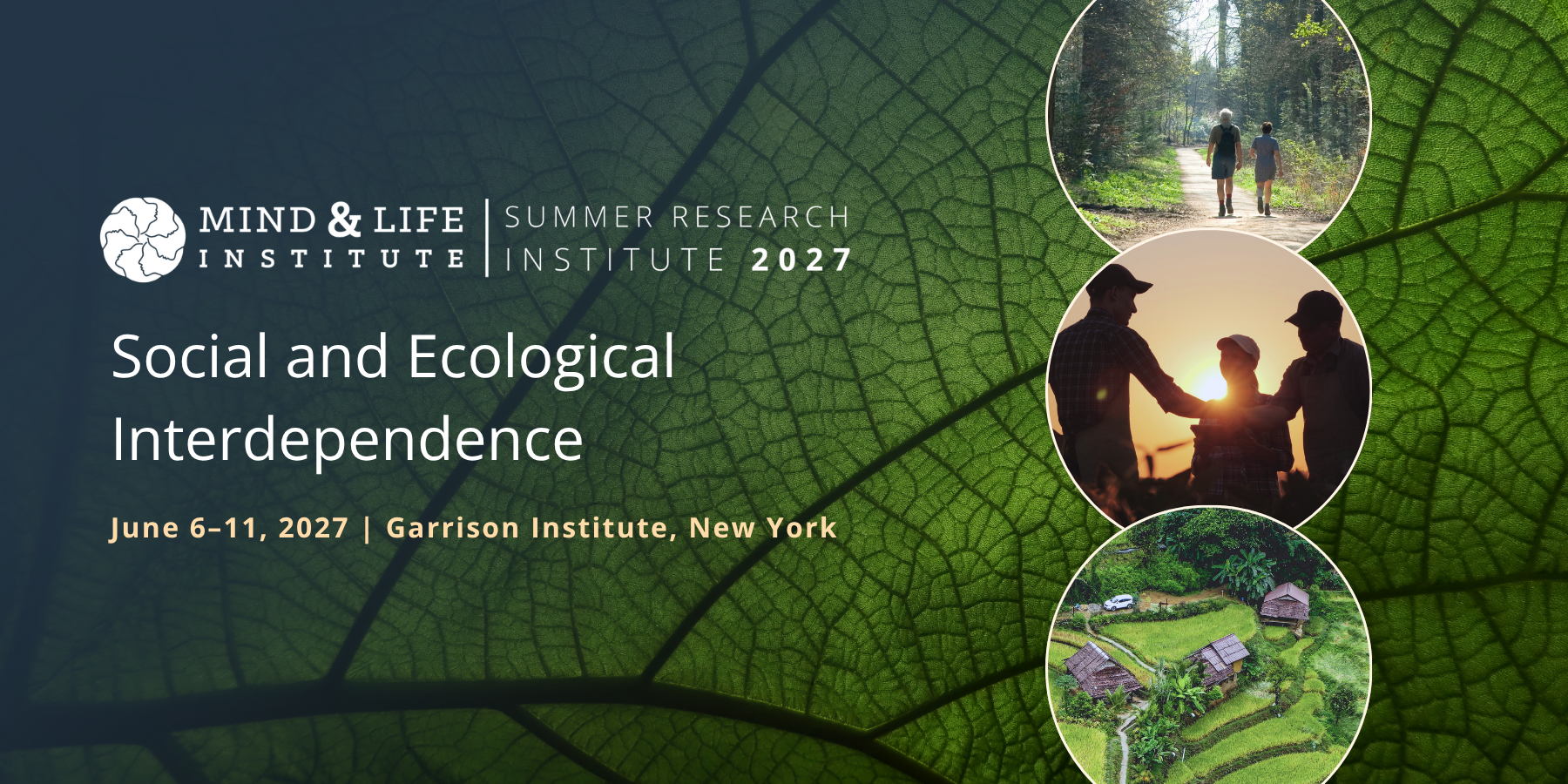
June 6 – 11, 2027 | Garrison Institute, New York
Applications for the 2027 SRI open Monday, December 1, 2026
Application deadline for 2027 SRI is January 25, 2027
Decision notifications will be sent in early March 2027
Social and Ecological Interdependence:
Bridging Mind, Community, and Earth Awareness
The 2027 Mind & Life Summer Research Institute (SRI) invites researchers, scholars, contemplative practitioners, community leaders, and policymakers to examine one of the most pressing mandates of our era: recognizing, expressing, and leveraging ecosocial interdependence to advance flourishing for all beings and the Earth.
Ecosocial interdependence refers to the reciprocal relationships through which human communities and ecological systems shape and sustain one another. These relationships extend to the mind itself: emerging interdisciplinary insights reveal how deeply individual mental well-being is connected to social dynamics, cultural narratives, and the vitality of our living planet. SRI 2027 is grounded in deep Earth awareness—an understanding of how personal flourishing, social justice, humanistic inquiry and ethics, and eco-resilience shape one another within a dynamic, living whole.
Core Focus and Vision
SRI 2027 advances an integrative framework that weaves together cognitive neuroscience, cultural psychology, environmental humanities and science, ecological wisdom, place-based community practices, and contemplative traditions. Participants will explore how beliefs, values, and practices—ranging from traditional wisdom-based practices, mindfulness, and attentional training to narrative reflection, sensory ecology, and collective action—can harness our interdependence to transform our relationship with local and global ecosystems.
By bridging cutting-edge bio-psycho-social-environmental research with ancestral traditions, literary and philosophical studies, and premodern wisdom, SRI 2027 seeks to cultivate:
- Attentional and Perceptual Presence: Refining inner awareness, examining the stories that shape our perception, and attuning the senses to listen deeply to the land and respond to the subtle rhythms of our natural surroundings.
- Relational, Ethical, and Compassion Capacity: Extending compassion, perspective-taking, and moral consideration beyond human social networks to the more-than-human world.
- Systems Sensing and Ecological Literacy: Developing cognitive, humanistic, and experiential frameworks to perceive complex, interdependent networks—from local microbiomes and oral histories to global planetary dynamics—while recognizing how culture shapes what we perceive and how we understand.
- Embodied Eco-social Action: Developing strategies in partnership with communities that draw on the arts and humanities, contemplative practice, and eco-philosophy to strengthen resilience, environmental stewardship, and climate mitigation and adaptation.
- Contemplative Traditions and Ecology: Exploring contemplative worldviews that frame human life as part of a larger community of kin—including other species, the land, and the cosmos—and emphasize equality, reciprocity and cooperation within that community rather than domination.
- Transdisciplinary and Community-Engaged Research: Building research-community partnerships and developing methods and ethical frameworks that draw on diverse disciplines and ways of knowing—including Eastern, Western, and Indigenous traditions—to shape research questions, interpret findings, and apply insights across disciplinary and community boundaries..
Together, we will investigate how cultivating embodied Earth awareness and drawing upon the richness of the natural sciences and humanities can together catalyze resilience, nurture mental health in an age of ecological transition, and inspire collective action for a thriving future.
Mind & Life’s 2027 Summer Research Institute is made possible through the longstanding support of the Hershey Family Foundation. Additional support for the 2027 SRI is provided by the BESS Family Foundation. We are deeply grateful for these partnerships in advancing this work and for all supporters of the Mind & Life Institute.
Faculty Spotlight

Doris F. Chang, PhD
New York University
Convening Faculty, Grantee, Mentor, Research and Programs Council Member, Reviewer
Dr. Chang is a licensed clinical psychologist and Professor at the NYU Silver School of Social Work. Her research seeks to advance the well-being of BIPOC communities by understanding the … MORE

Jyoti Mishra
University of California–San Diego
Earth Awareness Working Group, Grantee
Dr. Jyoti Mishra is an Associate Professor in the department of Psychiatry at the University of California San Diego. She is the founder and director of the NEATLabs and the … MORE

Yikai Xu (徐毅凯)
New York University
Research and Programs Council Member
Yikai is a PhD candidate in Clinical/Counseling psychology at the Culture, Emotion, and Health Lab at New York University and a member of Mind & Life’s Research and Program Council. … MORE

Sarina Saturn, PhD
OEA Choice Trust
Mentor
Sarina Rodrigues Saturn, PhD, was a faculty member at the University of Portland. She received her Ph.D. in neuroscience from New York University under the mentorship of Joseph LeDoux. Her … MORE
The goals of the Mind & Life Summer Research Institute are:
- To spark new research ideas and interdisciplinary collaborations that explore the human mind; test the impacts of contemplative practices, interventions, and programs on brain, mind, behavior, health, and social relationships, using measurable metrics, always aiming for continuous improvement.
- To translate contemplative research into measurable social impact on behalf of the greater good through rigorous methods and best practices including implementation science that facilitates the uptake of evidence-based practice and research into regular use by closing the gap between what we know (research or evidence) and what we do (practice). Where relevant, SRI seeks to support research on contemplative science whose applications improve social institutions and policies.
- To train participants in emerging methods and best practices, explore opportunities and challenges of scaling up levels of analysis from the individual mind to interpersonal relationships to small groups to communities to larger societies. The long-term goal of SRI is to incentivize systems change oriented research that investigates the whole, builds upon individual parts, and aims to understand key interconnections within a system and between systems.
- To experiment with topical themes as well as forms of engagement that utilize its core strengths to address contemporary social issues. Future themes might include artificial intelligence, technology, social polarization, interconnectedness, etc.
- To create a space for dialogue that embodies a contemplative orientation, fosters deep and lasting relationship building among diverse participants, and creates a safe and welcoming environment for meaningful connections and group cohesiveness.
- To nurture and grow a new generation of scientists and scholars (undergraduates, graduate students, and postdocs), contemplative practitioners, and policymakers interested in innovative and interdisciplinary collaborative research and action to address contemporary challenges.
Mind & Life is committed to exploring and facilitating in depth and honest discussion around issues of diversity, equity, and inclusion during the SRI. We know that these are hard topics and encourage the community to use skills honed during our contemplative practices to engage in this critical work together.
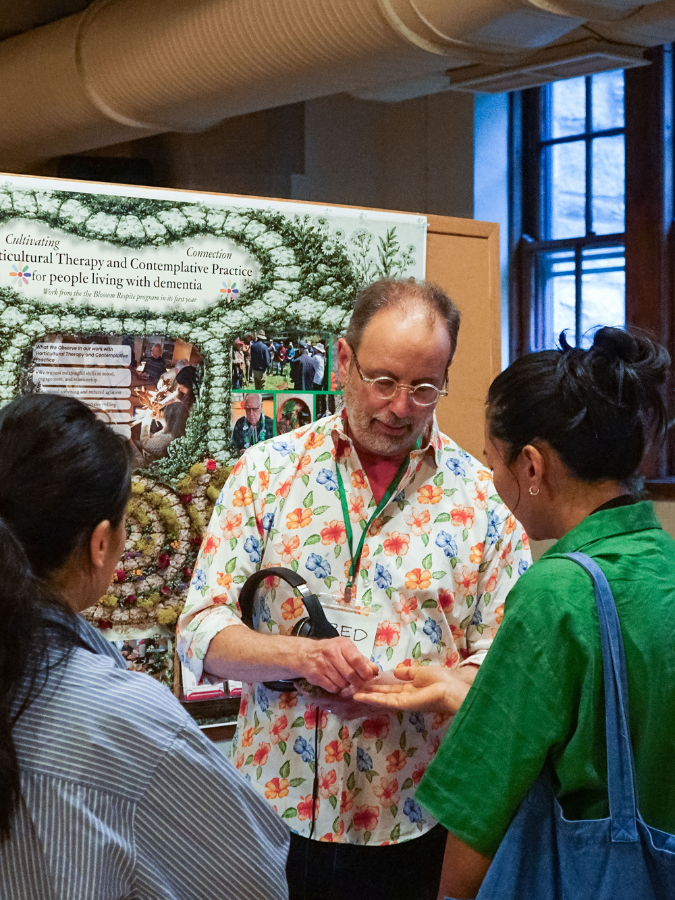
Who Should Attend?
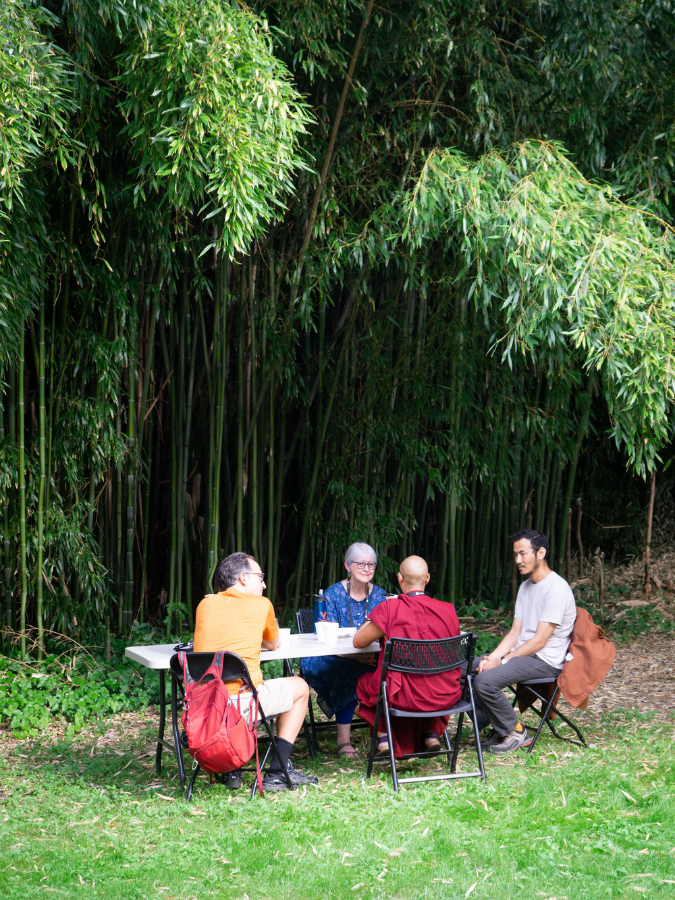
Anyone whose work aligns with this year’s theme, “Social and Ecological Interdependence,” is welcome, including researchers (e.g., scientists, humanities scholars), educators, practitioners, contemplatives, and practice and policy leaders.
The Mind & Life Institute is committed to:
- Building a thoughtful and engaged interdisciplinary community that integrates diverse perspectives and experiences.
- Offering catalytic and transformative opportunities, especially for those early in their careers.
This unique, international gathering offers the opportunity to deepen work and connections, and the potential to spark innovative and interdisciplinary collaborations and projects.
Applicants must apply to one of two categories of participants:
- Emerging: Students (undergraduate and graduate), postdoctoral fellows, junior faculty (researchers across the sciences and humanities), early-career practice and policy leaders and professionals, and contemplative practitioners within five years of appointment or beginning work in the field. Please note: Emerging researchers who attend the SRI become eligible to apply for the Mind & Life Research Grants.
- Established: Researchers (across the sciences and humanities), contemplative teachers, and practice and policy makers (professionals, policymakers, leaders, activists), and those interested in this topic, who have held faculty appointments or positions for more than five years.
We welcome candidates of all races, ethnicities, classes, genders, ages, religions and spiritualities, physical abilities, sexual orientations, geographic locations, disciplines, and institutions to apply.
Registration Fees
The registration fee is paid by successful applicants at the time of registration. The fee covers all program fees, room (shared), and board (three vegetarian meals per day). Each participant is expected to cover his/her/their own travel expenses. The registration fee will also provide participants access to video recordings of all plenary and panel sessions from the event for 6 months after the event.
$585 for Emerging Participants
$815 for Established Participants
Scholarships
In our continued efforts towards equity, diversity, and inclusion, Mind & Life has committed to increase the participation of individuals from culturally diverse and historically underrepresented backgrounds, and those with financial need. We are aware that our gathering is immeasurably enriched through a multitude of perspectives and experiences. With the support of generous donors, scholarship funding is available to people who might otherwise be unable to attend the SRI. Scholarship awards will be made available to help with registration and travel costs. Applicants may apply to be considered for one or both.
In addition, scholarship funding is also available for individuals who are full-time monastics or members of the clergy (ordained or in full-time training). Individuals who wish to be considered for a monastic scholarship should indicate so as part of their scholarship application as well as submit a brief 150-word description of their monastic/clerical background.
Scholarship applications are submitted as part of the general application form (opening on December 1, 2026). In order to be considered for a scholarship, applicants must submit an additional 150-300 word personal statement that describes their need and how a scholarship to the SRI will enable their work and help them to achieve their research/professional goals.
Scholarship recipients will be notified of their awards, including funding amounts, along with the general application decision letters that will be sent in early-mid March.
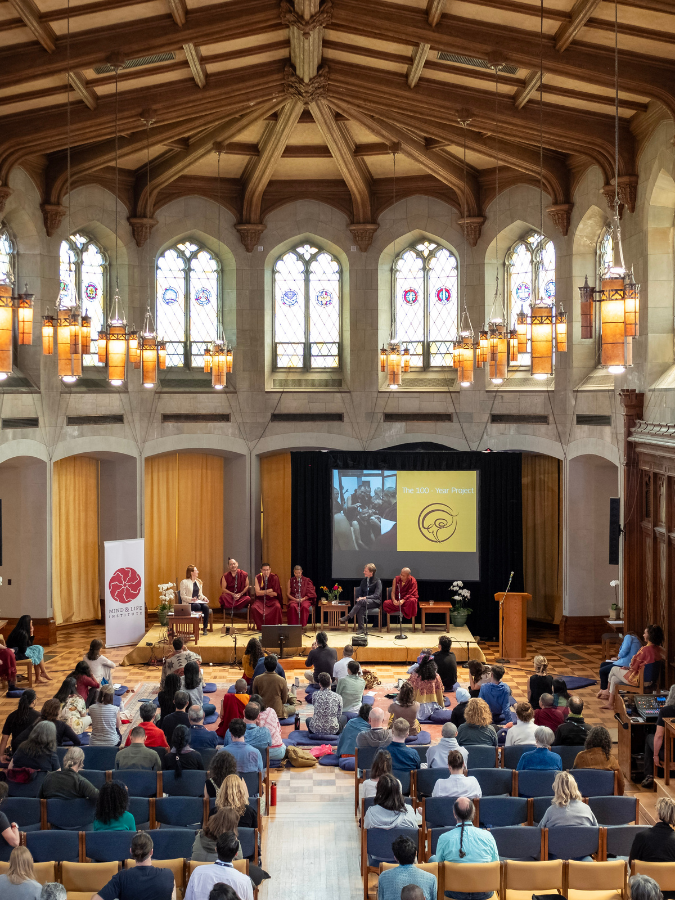
Venue: The Garrison Institute, New York
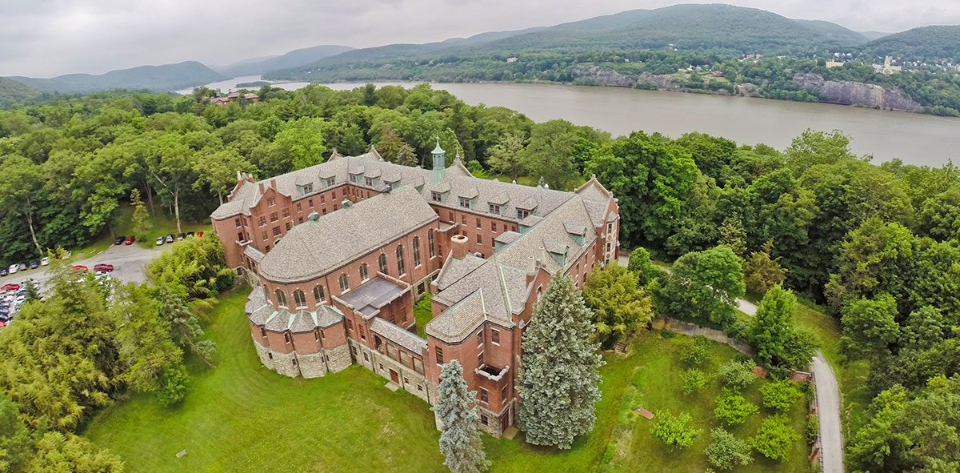
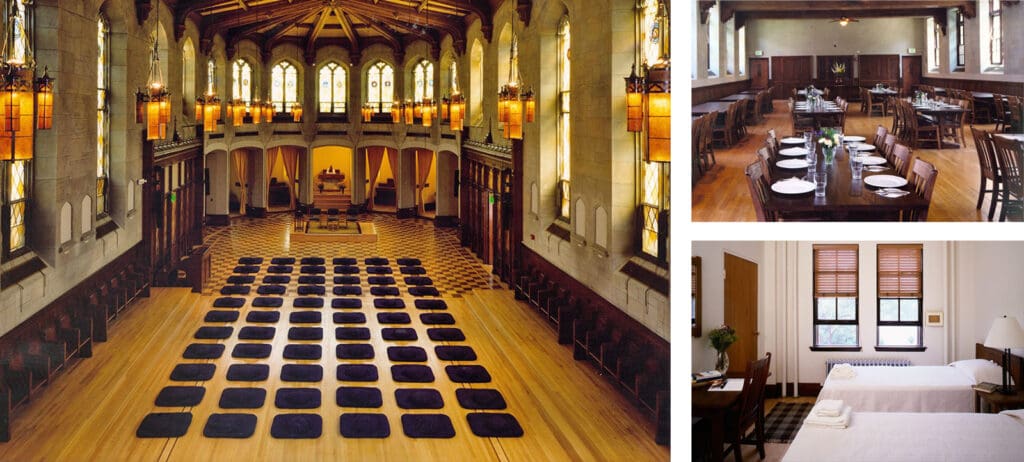
The 2027 Summer Research Institute will be held at the beautiful and serene Garrison Institute in Garrison, New York (located 50 miles north of New York City in the Hudson River Valley). This 1923 four story building, which was originally a Capuchin monastery and seminary, was renovated in 2003 with the opening of the Garrison Institute. In addition to your lodging, Garrison provides three meals daily served in the dining hall. Garrison’s “famous kitchen” serves vegetarian meals, prepared with most of the ingredients from farms and producers in the Hudson Valley. If attendees would like to bring personal food items, there is access to refrigerated and dry storage in the central kitchen for any personal food items. In the kitchen and beyond, Garrison Institute maintains a commitment to sustainability.
As an historic property, accommodations at Garrison are modest (twin/single beds) with no air-conditioning. Attendees should expect shared rooming (up to two individuals per room). Note that each floor has communal binary bathrooms that include individual private shower stalls. Mind & Life supports an inclusive environment and encourages attendees to choose bathrooms that are comfortable for them based on how they identify. We encourage guests to view the photos and information on the Garrison website.
Attendees with mobility concerns should be aware that the four story Garrison Institute building does not have elevator access to higher or lower levels. If needed, all sessions will be held on the main level. Please contact Mind & Life if you are unable to reach the lower level by stairs or if you require first floor accommodation as there is only one sleeping room on the first floor available which is ADA compliant.
For more information about the Garrison Institute, including photos, please visit their website.
If you have questions or concerns regarding your stay at the Garrison Institute, we welcome you to reach out to sri@mindandlife.org at any point during the application and registration process.
If you have any questions, please email sri@mindandlife.org.