
What it means for contemplative practices to work—and what work such practices do—is different in diverse cultural contexts. This is something often obscured by scientific studies that see contemplative practices primarily in terms of brain-states. In these models, an individual performs a certain practice and, if done properly, a certain internal mental state arises. I …
Topic Archives:
Contemplative Life: An Anthropological Perspective
The scientific study of contemplative practices, their mechanisms and effects has provided significant insights into aspects of the human mind and behaviour. When Jon Kabat-Zinn insists that mindfulness is not a technique but a way of being, he is echoing how the world’s wisdom traditions commonly have conceived of the path towards realization: it involves …
Continue reading “Contemplative Life: An Anthropological Perspective”
2016 Summer Research Institute
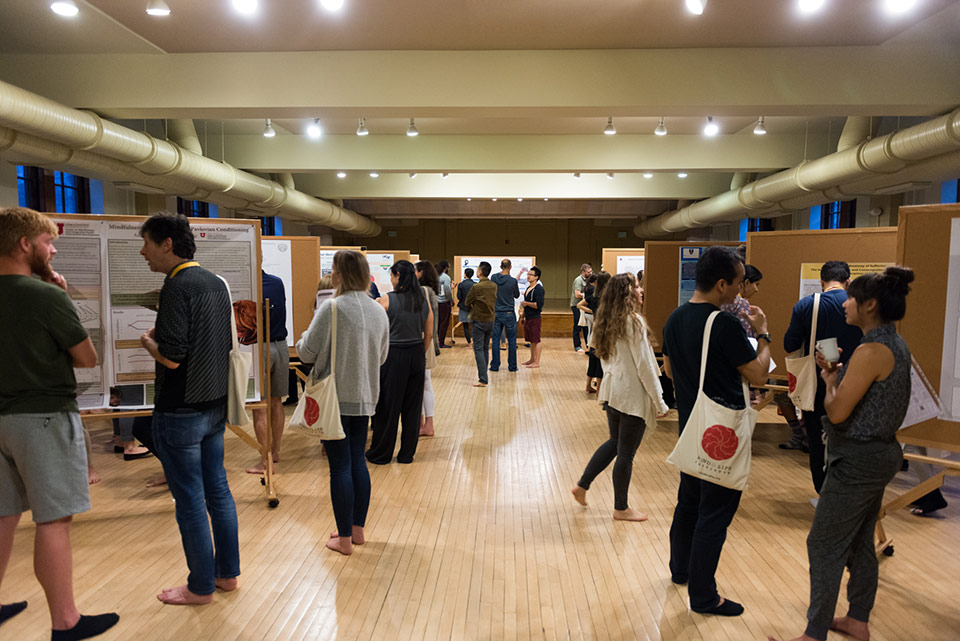
The 2016 Mind and Life Summer Research Institute (MLSRI) will be devoted to the theme of context, and its relevance for basic mental processes as well as effects of contemplative practices. Findings from the cognitive and social sciences, humanities, and philosophy increasingly suggest that context shapes mind in fundamental ways. With regard to contemplative studies, practices that were once embedded within traditional religious cultures are now being widely disseminated across a variety of globalized, largely secular settings. Contextual factors impact the very course and outcome of these practices, and if not carefully considered, even well-intended efforts can lead to unsatisfactory or incomplete results.
2017 Summer Research Institute

The 2017 Mind & Life Summer Research Institute gives attention to scientific, humanistic and first-person contemplative perspectives on intersubjectivity and social connectivity. Plenary presentations, workshops and small group discussions explore interrelational human dynamics, including how we relate to ourselves and others, and to community and strangers. Faculty from across a multitude of disciplines present research findings on the meditative cultivation of pro-social emotions, intergroup dynamics, social and embodied cognition, cognitive ecology, implicit bias and social justice.
Interdependency: the Buddha’s Central Insight
This presentation will outline the Buddha’s basic approach to understanding our cognitive processes, focusing on dependent arising or radical interdependency. William Waldron will discuss the factors involved in the dependent arising of cognitive awareness and the co-arising of our “world” as first articulated in the early teachings. He will then present how these basic analyses …
Continue reading “Interdependency: the Buddha’s Central Insight”
Mindfulness Is Always a Multicultural Experience, Even When It Is Not
Over the past thirty years with the development of Western Insight Meditation communities and Vipassana practice in North America, there has been a process of collective transformation that has been both painstakingly incremental and incontrovertibly powerful. This presentation reviews some of the history and growth of multicultural mindfulness communities; personal experience of diverse practitioners; visual …
Continue reading “Mindfulness Is Always a Multicultural Experience, Even When It Is Not”
2018 Summer Research Institute
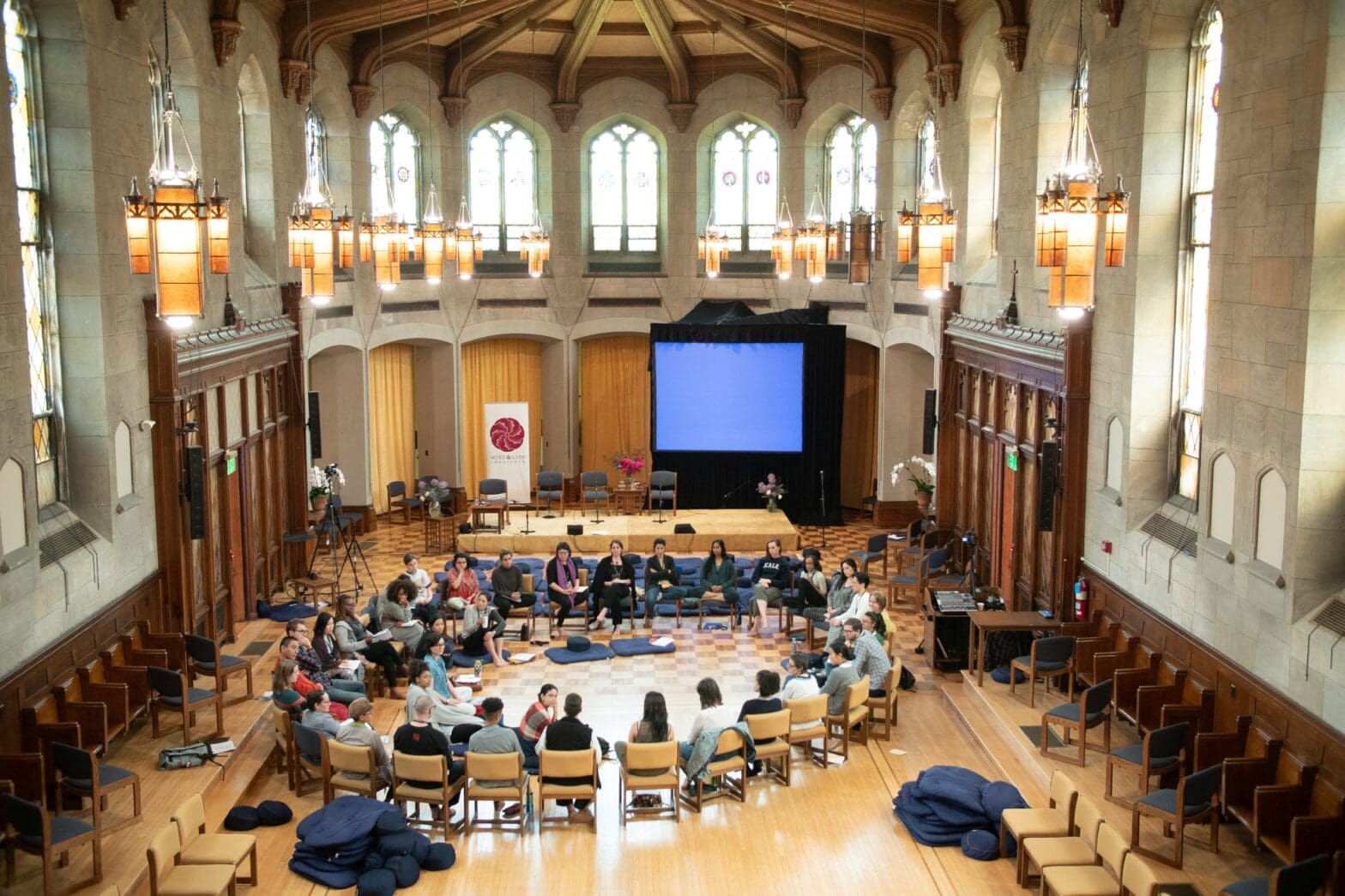
The 2018 Mind & Life Summer Research Institute extends the arc from the 2016 and 2017 programs that addressed themes of context, social connectivity, and intersubjectivity by engaging critical topics relevant to cultural difference and human diversity. The weeklong immersive program will examine social and psychological patterns, both implicit and explicit, to discuss how difference is constructed at personal, interpersonal, and socio-structural levels. Scientific, humanistic, and first-person contemplative perspectives will give attention to processes of othering and how we can overcome conflict by embracing difference.
Helen Weng: Using Science to Spread a Message of Compassion, Equity, and Inclusion
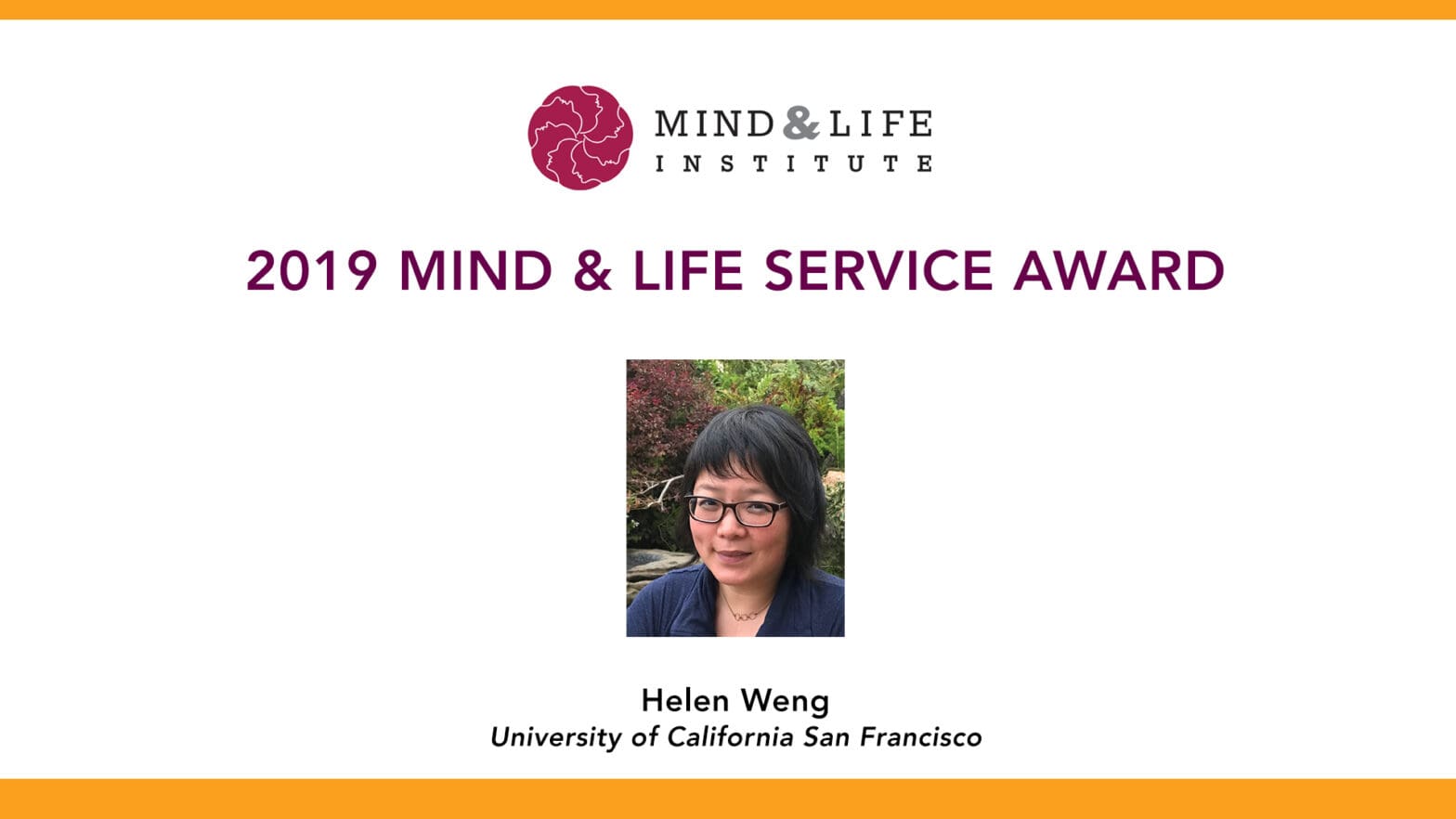
In late 2019, Helen Weng, PhD was honored with the Mind & Life Institute Annual Service Award. The award is given to individuals who are distinguished by the breadth and depth of their involvement with Mind & Life, and who embody its core values of compassion, integrity, curiosity, inclusion, and excellence. Below is a tribute …
Othering and Belonging
Othering and Belonging is the problem of the 21st century. In this talk, the presenter will describe how the changes in the world are creating deep stress and anxiety. This process is likely to increase for the foreseeable future. This stress is both biological and ontological. The way we respond is social. The underlying issue …
How Thinking About Thinking Shapes the Human Experience of Spirit
This talk makes the argument that the way people think about their minds shapes the way they come to know spirit. This is done by looking at the kinds of people who have more vivid spiritual experiences (they are more likely to get absorbed in their inner worlds), the way prayers train attention to inner …
Continue reading “How Thinking About Thinking Shapes the Human Experience of Spirit”