
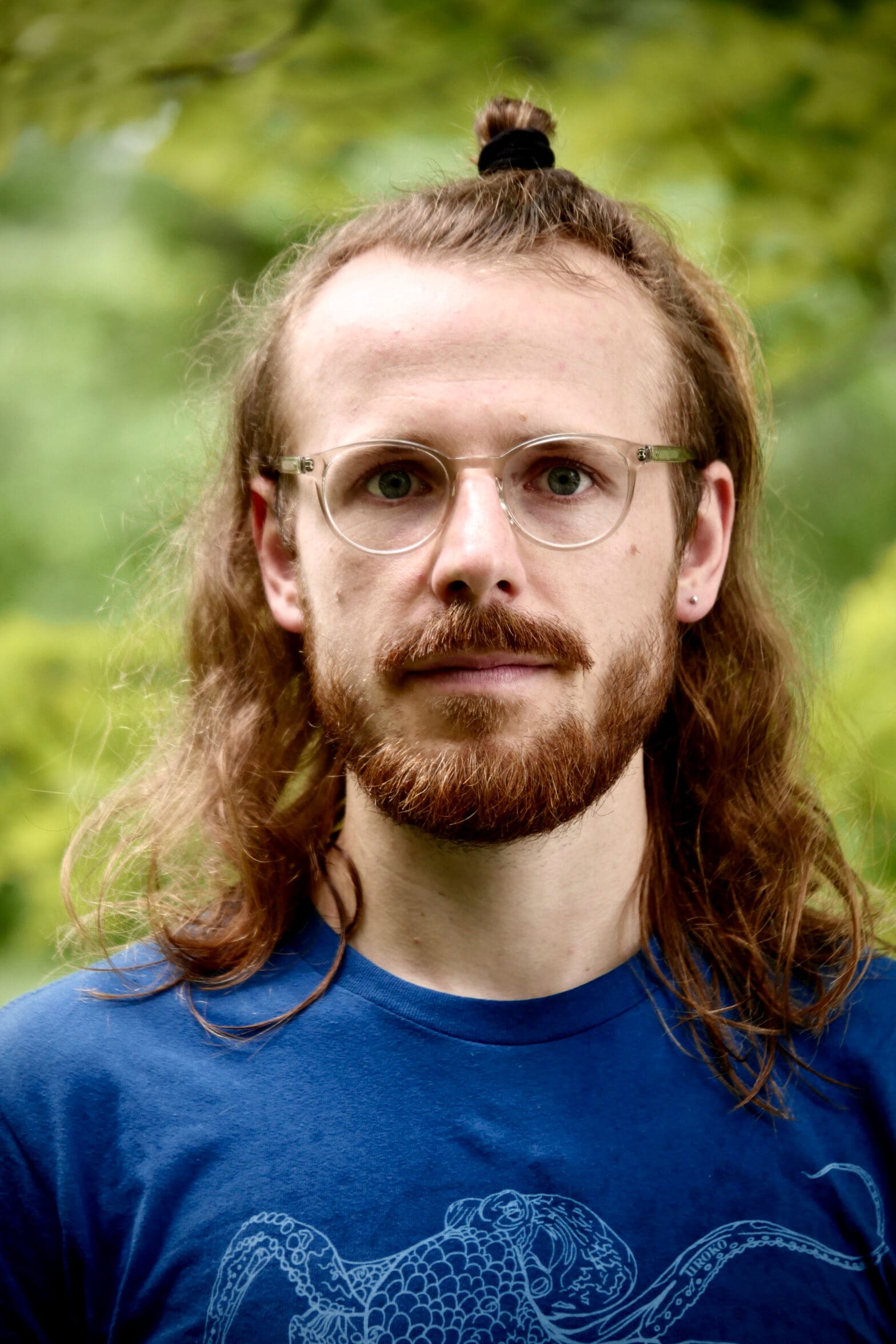
Jonas Mago is a cognitive neuroscientist and wellbeing aficionado, interested in the cognitive mechanisms underlying human flourishing. His research investigates contemplative practices that aim to bring about wholesome states of mind – from meditation and prayer to collective cultural rituals and psychedelic therapies. Jonas works from an interdisciplinary perspective, combining cognitive, neurobiological, computational, and phenomenological …
Search results for:
neuroscience
Larry Ward
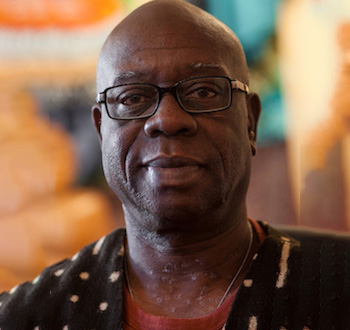
Dr. Larry Ward is the co-founder of The Lotus Institute, a senior teacher in Zen Master Thich Nhat Hanh’s Plum Village tradition of Engaged Buddhism, the author of America’s Racial Karma, and host of the Beyond the News podcast. Dr. Ward holds a PhD in Religious Studies with an emphasis on Buddhism and the neuroscience …
Sará King, M.A., Ph.D.

Dr. Sará King is an internationally recognized neuroscientist, artist, political and learning scientist, education philosopher, social impact entrepreneur, and public speaker. She has completed her YTT-200 and YTT-300 hr. yoga teacher trainings as well as her certification as a mindfulness meditation teacher with Spirit Rock in Marin, CA. She is passionate about catalyzing humanity’s capacity to …
Jennifer Webb

Jennifer B. Webb, Ph.D., RYT-200 is an Associate Professor in the Department of Psychological Science and the Health Psychology Ph.D. Program at UNC Charlotte where she directs the WE ARE MIND-BODY KYND Lab. She received her undergraduate degree in Cognitive Neuroscience from Harvard University. She went on to complete her Ph.D. in clinical psychology at …
Anat Perry

Anat Perry is an associate professor at the Psychology department, at the Hebrew University of Jerusalem, where she established the University’s Social Cognitive Neuroscience Lab. Before joining the Hebrew University, she was a postdoctoral fellow at the University of California, Berkeley. Perry studies various facets of empathy and related social processes through the prism of …
Fostering compassionate communities: Enhancing empathy for diverse others by intentional listening – Behavioral, physiological, and neural mechanisms
Escalating social polarization, occurring globally and characterized by increasingly divergent views on key issues, is straining societal bonds and communication. To counter this, it’s crucial to encourage practices that promote understanding and respectful discourse among those with differing views. This project aims to explore the potential of intentional listening – actively seeking discomfort when listening …
The Psychobiology of Destructive Emotions (Part Three)
From the Buddhist perspective, and given the neurological insights, we revisit the question of the boundary between the utility of negative emotions and their destructive nature.
Cultural and Developmental Neuroplasticity (Part One)
The neural circuitry that governs emotional life is among the last part of the brain to become anatomically mature, and repeated experiences are among the stronger forces that sculpt the developing brain-as evidence from in cross-cultural and child development studies shows.
The Psychobiology of Destructive Emotions (Part One)
Emotions become destructive when normal neural systems for essential behavior go to extremes, compelling us to react in inappropriate, harmful ways. To understand why this happens so easily in modern life, we examine first the impact that the role of emotions as a survival mechanism in evolution has had on our neural architecture.
What Do We Mean by ‘Destructive’ Emotions? (Part Two)
This philosophical dialogue investigates the transformation of negative emotions into ‘destructive’ forces, examining both Western and Buddhist perspectives. The Western view encompasses historical concerns in moral philosophy, spanning spiritual exercises for moral enhancement and addressing the biological dimension of emotions, while the Buddhist stance, rooted in phenomenology, identifies ‘Klesha’ as ‘mental affliction,’ attributing destructive emotions to obscurations that can be eliminated for lasting freedom or Nirvana.