Session – Mental Training: Impact on Neuronal, Cognitive and Emotional Plasticity

Session – Mental Training: Impact on Neuronal, Cognitive and Emotional Plasticity

Overview

As part of the grand opening of the Center for Healthy Minds, the Dalai Lama, along with contemplatives and contemplative scholars, engaged in a dialogue with scientists envisioned in the style of a working lab meeting. Presented as a single session to update His Holiness on the latest scientific discoveries, participants outlined recent research findings as well as obstacles and challenges.

  • Dialogue 21
    1 sessions
  • May 16, 2010
    Dharamsala, Himachal Pradesh, India
  • share

Speakers

Antoine Lutz

Antoine Lutz, PhD is an Associate Scientist at the Laboratory For Functional Brain Imaging and Behavior at the Waisman Center in the University of Wisconsin-Madison. His research interests focus on the role of large-scale neuronal integration (neural synchrony mechanisms) during various mental states (voluntary attention, emotion generation) and on the impact of standard meditation techniques on basic affective, cognitive and social functions and on the brain mechanisms that subserve these processes. His research has been largely supported by grants from the National Institute of Health. He is associated with the Center for Investigating Healthy Minds in Madison. He received his PhD in cognitive neuroscience at Paris University under the supervision of Dr. Francisco Varela. He did his post-doctoral work at the University of Wisconsin-Madison under the supervision of Dr. Richard Davidson.

B. Alan Wallace

B. Alan Wallace is president of The Santa Barbara Institute for Consciousness Studies. He trained for many years as a monk in Buddhist monasteries in India and Switzerland. He has taught Buddhist theory and practice in Europe and America since 1976 and has served as interpreter for numerous Tibetan scholars and contemplatives, including H. H. the Dalai Lama. After graduating summa cum laude from Amherst College, where he studied physics and the ahilosophy of science, he earned his M.A. and Ph.D. in religious Studies at Stanford University. He has edited, translated, 13 authored, and contributed to more than thirty books on Tibetan Buddhism, medicine, language, and culture, and the interface between science and religion.

Barbara Fredrickson

Barbara L. Fredrickson, Ph.D., is Director of the Positive Emotions and Psychophysiology Laboratory (a.k.a. PEPlab) at the University of North Carolina at Chapel Hill. She received her B.A. in Psychology from Carleton College in Northfield, Minnesota, and her Ph.D. in Psychology from Stanford University. After a post-doctoral fellowship at the University of California at Berkeley, she held faculty positions at Duke University and the University of Michigan. She is currently Kenan Distinguished Professor at the University of North Carolina within their Social Psychology Program and an elected Board Member of the Association of Psychological Science. Fredrickson’s research centers on emotions and well-being. She is most known for her broaden-and-build theory of positive emotions. This perspective holds that positive emotions are evolved adaptations that widen the scope of people’s attention and action repertoires in ways that, over time, build consequential resources for survival. She and her students test aspects of the broaden-and-build theory in laboratory and field experiments, using self-report, behavioral, and physiological measures. Fredrickson is especially interested in the contributions that various positive emotions may make toward people’s likelihood of attaining flourishing mental health. She has written over 70 journal articles and book chapters, is co-author of a leading introductory psychology textbook, and author of a forthcoming book describing the science of positive emotions for a lay audience (Crown Books, 2009). She has received numerous awards for her research and teaching, including the American Psychological Association’s Templeton Prize in Positive Psychology.

Cliff Saron

Cliff Saron, Ph.D., is currently an Assistant Research Scientist at the Center for Mind and Brain at the University of California at Davis (http://mindbrain.ucdavis.edu), and faculty member of the UC Davis M.I.N.D. Institute. He received his Ph.D. in Neuroscience from the Albert Einstein College of Medicine in 1999 studying interhemispheric visuomotor integration under the direction of Herbert Vaughan, Jr. Dr. Saron has had a long-standing interest in brain and behavioral effects of meditation practice and has been faculty at the Mind and Life Summer Institute for the past three years. In the early 1990's he was centrally involved in a field research project investigating Tibetan Buddhist mind training in collaboration with Jose Cabezón, Richard Davidson, Francisco Varela, Alan Wallace and others under the auspices of the Private Office of H.H. the Dalai Lama and the Mind and Life Institute. Currently, in collaboration with Buddhist scholar Alan Wallace and a consortium of scientists at UC Davis and elsewhere, he is Principal Investigator of The Shamatha Project, a unique longitudinal study of the effects of intensive meditation training based on the practice of meditative quiescence (shamatha) and cultivation of the four immeasurables (loving kindness, compassion, empathetic joy, and equanimity) on attention-related skills and emotion regulation. The Shamatha Project is the most comprehensive and multimethod study to date regarding the potential effects of long-term intensive meditation practice on basic mental and physical processes related to cognition, emotion, and motivation. His other primary research interest focuses on investigating brain and behavioral correlates of sensory processing and multisensory integration in children on the autistic spectrum.

John Dunne

John Dunne, PhD, holds the Distinguished Chair in Contemplative Humanities at the Center for Investigating Healthy Minds (CIHM) at the University of Wisconsin-Madison, with a joint appointment in the newly formed Department of Asian Languages and Cultures. His work focuses on Buddhist philosophy and contemplative practice, especially in dialogue with cognitive science. His publications include a monograph on Dharmakirti, and scientific studies of Buddhist contemplative practice with colleagues from various institutions, including the CIHM. His most recent work focuses on the nature of mindfulness in both theoretical and practical contexts. He was educated at the United States Air Force Academy, Amherst College, and Harvard University, where he received his PhD from the Committee on the Study of Religion in 1999.

Matthieu Ricard

Matthieu Ricard, PhD, is a Buddhist monk at Schechen Monastery in Kathmandu, Nepal. Born in France in 1946, he received a PhD in cellular genetics at the Institut Pasteur under Nobel Laureate FrancoisJacob. As a hobby, he wrote Animal Migrations (1969).He first traveled to the Himalayas in 1967 and has lived there since 1972, studying with Kangyur Rinpoche and Dilgo Khyentse Rinpoche, two of the most eminent Tibetan teachers of our times. Since 1989, he has served as the French interpreter for His Holiness the Dalai Lama. He is the author of The Monk and the Philosopher (with his father, the French thinker Jean-Francois Revel); The Quantum and the Lotus (with the astrophysicist Trinh Xuan Thuan); Happiness, A Guide to Developing Life’s Most Import-ant Skill; and Why Meditate?. He has translated several books from Tibetan into English and French, including The Life of Shabkar and The Heart of Compassion.As a photographer, Matthieu has published several albums, including The Spirit of Tibet, Buddhist Himalayas, Tibet, Motionless Journey, and Bhutan. He devotes all of the proceeds from his books and much of his time to 120 humanitarian projects in Tibet, Nepal, and India—and to the preservation of the Tibetan cultural heritage—through his charitable association, Karuna-Shechen. Ricard has been deeply involved in the work of the Mind & Life Institute for many years.

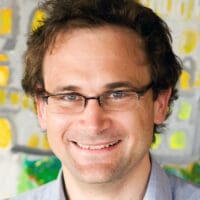
Richard Davidson

Richard J. Davidson, PhD, is the founder and chairman of the Center for Investigating Healthy Minds at the Waisman Center, and the director of the Laboratory for Affective Neuroscience and the Waisman Laboratory for Brain Imaging and Behavior, both at the University of Wisconsin–Madison. He was educated at New York University and Harvard University, where he received his bachelor’s of arts and PhD degrees, respectively, in psychology. Over the course of his research career, he has focused on the relationship between brain and emotion. He is currently the William James professor and Vilas research professor of psychology and psychiatry at the University of Wisconsin. He is co-author or editor of 13 books, including Visions of Compassion: Western Scientists and Tibetan Buddhists Examine Human Nature, The Handbook of Affective Science, and The Emotional Life of Your Brain. Davidson has published more than 300 chapters and journal articles, and is the recipient of numerous prestigious awards for his work, including the Research Scientist Award from the National Institute of Mental Health, the Distinguished Scientific Contribution Award from the American Psychological Association, and election to the American Academy of Arts and Sciences. He has served on the board of directors for the Mind & Life Institute since 1992. In 2006, Time named him one of the 100 most influential people in the world, and he received the first Mani Bhaumik Award from UCLA for advances in the understanding of the role of the brain and the conscious mind in healing.

Sharon Salzberg

Sharon Salzberg has been teaching meditation retreats worldwide for over 30 years. She is a co-founder of the Insight Meditation Society in Barre, Massachusetts, The Barre Center for Buddhist Studies and The Forest Refuge, a new center for long term meditation practice.

Thupten Jinpa

Thupten Jinpa, PhD, was trained as a monk at the Shartse College of Ganden Monastic University, South India, where he received the Geshe Lharam degree. In addition, Jinpa holds a bachelor’s honors degree in philosophy and a PhD in religious studies, both from Cambridge University. He taught at Ganden monastery and worked as a research fellow in Eastern religions at Girton College, Cambridge University. Jinpa has been the principal English translator to His Holiness the Dalai Lama since 1985 and has translated and edited numerous books by the Dalai Lama, including the New York Times best-sellers Ethics for the New Millennium and The Art of Happiness, as well as Beyond Religion, Universe in a Single Atom, and Transforming the Mind. His own publications include, in addition to numerous Tibetan works, Essential Mind Training; Wisdom of the Kadam Masters; Self, Reality, and Reason in Tibetan Philosophy: Tsongkhapa’s Quest for the Middle View; as well as translations of major Tibetan works featured in The Library of Tibetan Classics series. He is the main author of Compassion Cultivation Training (CCT), an eight-week formal program developed at the Center for Compassion and Altruism Research and Education (CCARE) at Stanford University. Jinpa is an adjunct professor on the faculty of religious studies at McGill University, Montreal; the founder and president of the Institute of Tibetan Classics, Montreal; and the general series editor of The Library of Tibetan Classics series. He has been a core member of the Mind & Life Institute from its inception. Jinpa lives in Montreal and is married with two daughters.