Opening Comments by the Dalai Lama and Francisco Valera

Opening Comments by the Dalai Lama and Francisco Valera

Overview

The Dalai Lama opens the meeting by calling for dialogue between Buddhist traditions and Western science to deepen understanding of the mind and support a more compassionate society. He emphasizes balancing material progress with inner development and encourages mutual learning between scientists and Buddhist practitioners. Francisco Varela then outlines the meeting’s purpose and program, explaining why the cognitive and life sciences offer promising ground for this exchange. Topics include scientific methods, perception, cognitive psychology, artificial intelligence, brain development, and evolution. Morning presentations will introduce established scientific perspectives, while afternoons will allow open discussion and personal viewpoints. Both emphasize an informal, respectful exchange that can lay the groundwork for future collaboration benefiting humanity.

Speakers

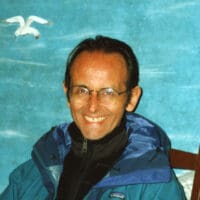
Francisco Varela

Francisco J. Varela (1946-2001) co-founded the Mind & Life Institute in 1987. Born in Chile, he received his PhD in Biology from Harvard University in 1970. Trained as a biologist, mathematician, and philosopher, he wrote and edited numerous books and journal articles on biology, neurology, cognitive science, mathematics, and philosophy. Francisco introduced the concept of autopoiesis to biology and supported embodied philosophy, viewing human cognition and consciousness in terms of the enactive structures in which they arise. His work popularized within the field of neuroscience the concept of neurophenomenology, which requires observers to examine their own conscious experience using scientifically verifiable methods. His book The Embodied Mind: Cognitive Science and Human Experience (1991), co-authored with Evan Thompson and Eleanor Rosch, is considered a classic in the field of cognitive science, offering pioneering phenomenological connections and introducing the Buddhism-informed enactivist and embodied cognition approach. In 2004, Mind & Life launched the Francisco J. Varela Research Grants to support the examination of contemplative techniques and their application to reducing human suffering and promote flourishing.

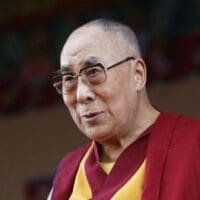
His Holiness The Dalai Lama

Tenzin Gyatso, the14th Dalai Lama, is the leader of Tibetan Buddhism and a spiritual leader revered worldwide. He was born on July 6, 1935, in a small village called Taktser in northeastern Tibet. Born to a peasant family, he was recognized at the age of two, in accordance with Tibetan tradition, as the reincarnation of his predecessor, the 13th Dalai Lama. The Dalai Lamas are manifestations of the Buddha of Compassion, who choose to reincarnate for the purpose of serving human beings. Winner of the Nobel Prize for Peace in 1989, he is universally respected as a spokesman for the compassionate and peaceful resolution of human conflict. He has traveled extensively, speaking on subjects including universal responsibility, love, compassion and kindness. Less well known is his intense personal interest in the sciences; he has said that if he were not a monk, he would have liked to be an engineer. As a youth in Lhasa it was he who was called on to fix broken machinery in the Potala Palace, be it a clock or a car. He has a vigorous interest in learning the newest developments in science, and brings to bear both a voice for the humanistic implications of the findings, and a high degree of intuitive methodological sophistication.