Compassion, Empathy, Altruism, and Prosocial Behavior

Compassion, Empathy, Altruism, and Prosocial Behavior

Overview

This opening session brings together Buddhism, psychology, neuroscience, and economics to challenge the assumption that human behavior is fundamentally driven by self-interest and to explore whether compassion can help shape more sustainable economic systems. The Dalai Lama argues that economic activity cannot be separated from human motivation and emotion, pointing to greed, speculation, ignorance, and narrow concern for profit as contributors to economic crisis and calling for a more holistic understanding of human well-being. Psychologist Daniel Batson presents experimental evidence supporting the “empathy-altruism hypothesis,” concluding that empathic concern can generate genuinely altruistic motivation rather than merely disguised self-interest, while the Dalai Lama emphasizes that mature compassion must extend beyond attachment to friends and loved ones toward an impartial concern for all beings. Tania Singer and Richard Davidson describe neuroscientific research distinguishing empathy from compassion and showing that compassion training can alter brain activity and increase altruistic behavior, even after relatively brief practice. Matthieu Ricard concludes that compassion is a trainable skill rooted in valuing the welfare of all sentient beings and explains how compassion can transform empathic distress into courageous, caring engagement, suggesting practical applications for caregivers and society more broadly.

Speakers

Daniel Batson

His Holiness The Dalai Lama

Tenzin Gyatso, the14th Dalai Lama, is the leader of Tibetan Buddhism and a spiritual leader revered worldwide. He was born on July 6, 1935, in a small village called Taktser in northeastern Tibet. Born to a peasant family, he was recognized at the age of two, in accordance with Tibetan tradition, as the reincarnation of his predecessor, the 13th Dalai Lama. The Dalai Lamas are manifestations of the Buddha of Compassion, who choose to reincarnate for the purpose of serving human beings. Winner of the Nobel Prize for Peace in 1989, he is universally respected as a spokesman for the compassionate and peaceful resolution of human conflict. He has traveled extensively, speaking on subjects including universal responsibility, love, compassion and kindness. Less well known is his intense personal interest in the sciences; he has said that if he were not a monk, he would have liked to be an engineer. As a youth in Lhasa it was he who was called on to fix broken machinery in the Potala Palace, be it a clock or a car. He has a vigorous interest in learning the newest developments in science, and brings to bear both a voice for the humanistic implications of the findings, and a high degree of intuitive methodological sophistication.

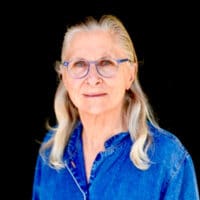
Joan Halifax

Roshi Joan Halifax, PhD, is a Buddhist teacher, Zen priest, anthropologist, and pioneer in the field of end-of-life care. Founder, abbot, and head teacher of Upaya Institute and Zen Center in Santa Fe, New Mexico, she received her PhD in medical anthropology in1973 while teaching at the University of Miami Medical School. She has been awarded a National Science Foundation fellowship in visual anthropology and an honorary research fellowship in medical ethnobotany at Harvard University, and was named a distinguished visiting scholar at the Library of Congress. From 1972–1975, she worked with psychiatrist Stanislav Grof at the Maryland Psychiatric Research Center with dying cancer patients. She has continued to work with dying people and their families, and she teaches healthcare professionals and family caregivers about the psychosocial, ethical, and spiritual aspects of caring for the dying. She is director of the Project on Being with Dying, and founder and director of the Upaya Prison Project, which has developed programs on meditation for prisoners. She studied with Zen teacher Seung Sahn, received the Lamp Transmission from Thich Nhat Hanh, and was given Inka by Roshi Bernie Glassman. A founding teacher of the Zen Peacemaker Order, her work and practice for more than four decades has focused on applied Buddhism.

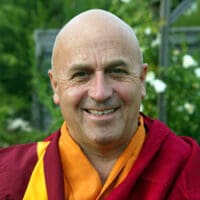
Matthieu Ricard

Matthieu Ricard, PhD, is a Buddhist monk at Schechen Monastery in Kathmandu, Nepal. Born in France in 1946, he received a PhD in cellular genetics at the Institut Pasteur under Nobel Laureate FrancoisJacob. As a hobby, he wrote Animal Migrations (1969).He first traveled to the Himalayas in 1967 and has lived there since 1972, studying with Kangyur Rinpoche and Dilgo Khyentse Rinpoche, two of the most eminent Tibetan teachers of our times. Since 1989, he has served as the French interpreter for His Holiness the Dalai Lama. He is the author of The Monk and the Philosopher (with his father, the French thinker Jean-Francois Revel); The Quantum and the Lotus (with the astrophysicist Trinh Xuan Thuan); Happiness, A Guide to Developing Life’s Most Import-ant Skill; and Why Meditate?. He has translated several books from Tibetan into English and French, including The Life of Shabkar and The Heart of Compassion.As a photographer, Matthieu has published several albums, including The Spirit of Tibet, Buddhist Himalayas, Tibet, Motionless Journey, and Bhutan. He devotes all of the proceeds from his books and much of his time to 120 humanitarian projects in Tibet, Nepal, and India—and to the preservation of the Tibetan cultural heritage—through his charitable association, Karuna-Shechen. Ricard has been deeply involved in the work of the Mind & Life Institute for many years.

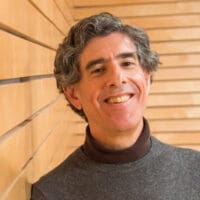
Richard Davidson

Richard J. Davidson, PhD, is the founder and chairman of the Center for Investigating Healthy Minds at the Waisman Center, and the director of the Laboratory for Affective Neuroscience and the Waisman Laboratory for Brain Imaging and Behavior, both at the University of Wisconsin–Madison. He was educated at New York University and Harvard University, where he received his bachelor’s of arts and PhD degrees, respectively, in psychology. Over the course of his research career, he has focused on the relationship between brain and emotion. He is currently the William James professor and Vilas research professor of psychology and psychiatry at the University of Wisconsin. He is co-author or editor of 13 books, including Visions of Compassion: Western Scientists and Tibetan Buddhists Examine Human Nature, The Handbook of Affective Science, and The Emotional Life of Your Brain. Davidson has published more than 300 chapters and journal articles, and is the recipient of numerous prestigious awards for his work, including the Research Scientist Award from the National Institute of Mental Health, the Distinguished Scientific Contribution Award from the American Psychological Association, and election to the American Academy of Arts and Sciences. He has served on the board of directors for the Mind & Life Institute since 1992. In 2006, Time named him one of the 100 most influential people in the world, and he received the first Mani Bhaumik Award from UCLA for advances in the understanding of the role of the brain and the conscious mind in healing.

Tania Singer

Tania Singer, PhD, received her PhD in psychology from Freie Universität Berlin in 2000 and was a Postdoctoral Fellow at the Max Planck Institute for Human Development in Berlin until 2002. Afterwards, she conducted research on the neural foundations of empathy and fairness at the Wellcome Department of Imaging Neuroscience in London from 2002–2005 and at the Institute of Cognitive Neuroscience in London from 2005–2006. In the same year, Tania took up the position of Assistant Professor of Social Neuroscience and Neuroeconomics at the University of Zurich in Switzerland, where she also became Co-Director of the Laboratory for Social and Neural Systems Research in 2007 and Inaugural Chair of Social Neuroscience and Neuroeconomics in 2008. Since 2010, she has been the Director of the Department of Social Neuroscience at the Max Planck Institute for Human Cognitive and Brain Sciences in Leipzig, Germany. Using a multi-method and interdisciplinary approach from areas such as neuroscience, developmental and social psychology, psychobiology, and economics, she investigates the foundations of human social behavior. More specifically, she is interested in the developmental, neural, and hormonal mechanisms underlying social cognition; social and moral emotions such as empathy, compassion, envy, revenge, and fairness; and emotion-regulation capacities and their role in social decision making. She co-organized the Mind and Life XX Conference “Altruism and Compassion in Economic Systems” in Zurich in 2010, and was recently elected as a Mind and Life board member and member of the Mind and Life European Committee.